
You're probably here because a tattoo that once made sense doesn't anymore. It might be a name, an old style, a rushed decision, or ink that no longer fits your work, your relationships, or how you see yourself now. That feeling is common. Industry data suggests about 23% of tattooed people experience regret, which helps explain why so many people start searching for practical local answers instead of abstract advice in a forum thread or a national ad tattoo removal trends and regret data.
If you've been typing laser tattoo removal near me Bradenton into Google, you likely don't want vague promises. You want to know how the laser works, how many visits this may take, what healing feels like, and how to judge cost without getting surprised later.
Table of Contents
- Thinking About Tattoo Removal in Bradenton
- How the PiQo4 Laser Erases Tattoos
- Mapping Your Removal Journey Sessions and Fading
- The Healing Process What to Expect After Each Session
- Is Laser Removal Right for You Cost and Safety in Bradenton
- Your First Step The EradiTatt Bradenton Consultation
- Post-Treatment Success Essential Aftercare and FAQs
Thinking About Tattoo Removal in Bradenton
You glance at your wrist before work and tug your sleeve down again. Later, at the beach or the gym, you do the same small routine. For many Bradenton residents, the decision to remove a tattoo starts there. Not with a dramatic moment, but with the quiet realization that they no longer want to keep managing it.

The first question is usually simple. Can this be removed? In many cases, yes. The better question is how the process unfolds from first treatment to final fading. Tattoo removal works more like clearing spilled ink from fabric over time than wiping marker off a whiteboard. The fading happens in stages, and each session builds on the last.
At EradiTatt Bradenton, I find that clear expectations calm nerves fast. Common initial questions include:
- How long will this take? Usually several visits spaced out over time.
- Will every color fade the same way? No. Some pigments respond faster than others.
- Do I need full removal? Not always. Many people want enough fading for a cover-up.
- What will healing look like? Your skin goes through predictable stages after each session.
That mental model matters. A good removal plan is not just about the laser. It is also about timing around sun exposure, workouts, work clothes, travel, and the healing window after each appointment. Patients tend to feel more confident once they can see the whole road ahead instead of treating each session like a standalone event.
For a closer look at what makes the technology effective, our guide to PiQo4 laser tattoo removal and why it is a strong choice for fading unwanted ink explains the basics in plain language. Readers who want broader context on lasers and resurfacing facial treatments can also get a helpful sense of how precision laser settings are used in skin-focused treatments.
One more point helps remove a lot of fear. Laser tattoo removal is not a mystery process where you wait and hope. It is a step-by-step treatment path. Once you understand what the laser does, how fading progresses, what healing looks like day by day, and what affects price, the whole experience becomes much easier to plan for.
How the PiQo4 Laser Erases Tattoos
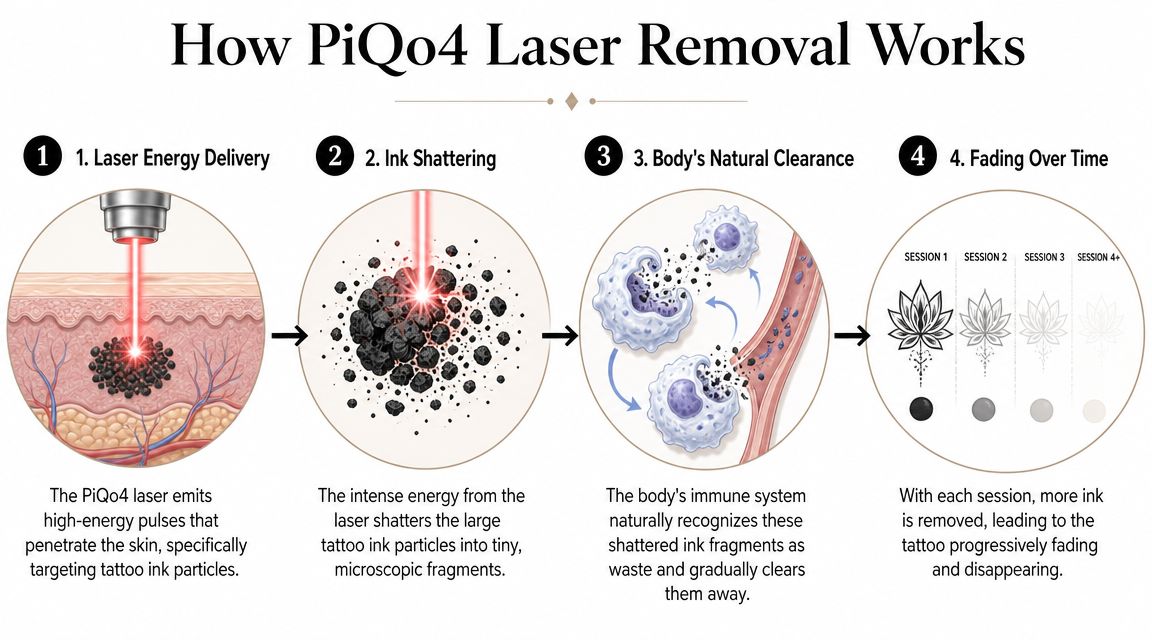
The easiest way to understand laser tattoo removal is to stop picturing “burning ink off.” That's not the goal. A modern pico-style system is trying to break the ink apart so your body can carry it away over time.
What the laser is actually doing
Think of tattoo pigment like a pile of rocks buried in the skin. Large rocks are hard for the body to move. If you break those rocks into tiny pebbles, cleanup becomes possible. That's the basic model.
The PiQo4 platform uses four wavelengths, 1064 nm, 532 nm, 585 nm, and 650 nm, to treat a broad range of pigments. It also uses photoacoustic shockwaves rather than heat alone to shatter ink, which helps reduce thermal injury to nearby tissue and lowers risks such as blistering or hypopigmentation PiQo4 wavelength and photoacoustic overview.
For readers who want broader context on how medical lasers interact with skin, this guide to lasers and resurfacing facial treatments gives a useful non-tattoo example of why precision settings matter so much in aesthetic treatments.
Practical rule: The laser doesn't “pull” ink out on the spot. It creates the conditions for your body to do the clearing between sessions.
Why wavelength matters
Not every tattoo is made of the same pigment mix. Black ink, red tones, and other colors absorb light differently. That's why wavelength matching matters so much.
Here's the plain-language version:
| Wavelength | Common role in treatment |
|---|---|
| 1064 nm | Often preferred for black ink and commonly favored for darker skin tones because it penetrates deeper with lower melanin absorption |
| 532 nm | Better suited to red and orange pigments closer to the skin surface |
| 585 nm and 650 nm | Help expand treatment options across a wider pigment range |
That doesn't mean every color disappears at the same speed. It means the provider has more precise tools to match the laser to the ink instead of forcing every tattoo through a one-setting approach.
If you want a more technical breakdown of the platform itself, this PiQo4 laser tattoo removal guide explains how treatment settings are chosen in more detail.
Mapping Your Removal Journey Sessions and Fading
A common Bradenton scenario goes like this. Two friends start laser tattoo removal around the same time, both with tattoos that look similar in size. Three months later, one piece looks much lighter, and the other seems stubborn. That difference usually has a clear reason. Tattoo removal follows a process, but it is not a copy-and-paste timeline.
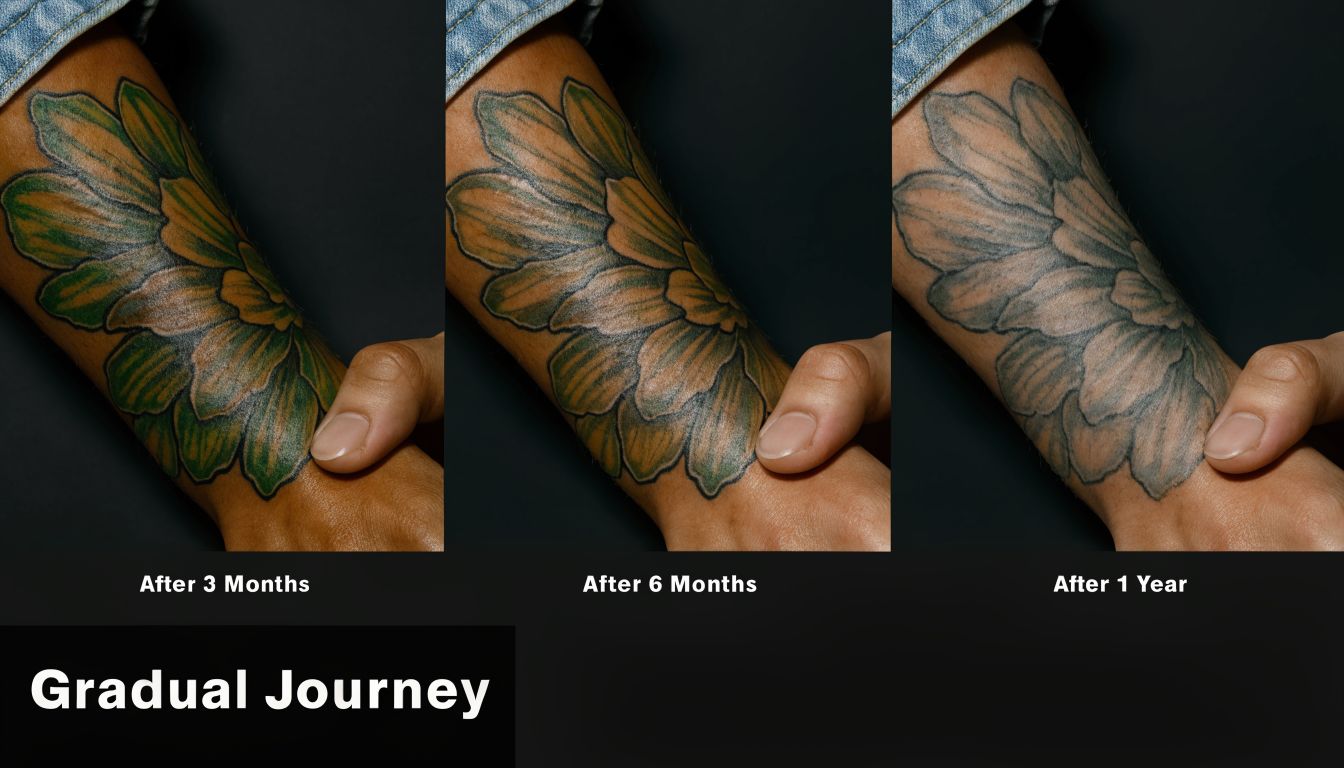
The easiest way to understand your journey is to separate two jobs. The laser session breaks pigment into smaller fragments. Your body then spends the following weeks clearing out that debris. Patients often expect the biggest change to happen in the room, but much of the visible fading happens after you leave.
That is why session planning needs to be personal. A tattoo is not just "small" or "large." We look at how heavily the ink was packed, how many colors are present, where it sits on the body, how old it is, and whether you want full removal or enough fading for a cover-up. If you want a local overview of how those variables affect timing, our guide on how many sessions tattoo removal may take in Bradenton breaks that down in plain language.
Why one tattoo fades faster than another
Here are the factors that usually shape the pace of fading:
- Ink density: Heavily saturated professional work often takes longer because there is more pigment to break apart and clear.
- Color mix: Black ink often behaves differently from greens, blues, reds, and layered multicolor designs.
- Location on the body: Areas with better circulation often clear differently than hands, feet, or lower legs.
- Tattoo age and layering: Older tattoos, cover-ups, and reworked pieces can respond in their own way.
- Your target endpoint: Full clearance usually requires a longer plan than lightening a tattoo enough for new artwork.
A practical way to frame it is this. The appointment starts the process. The weeks between sessions are where your immune system does the cleanup.
Full removal versus cover-up fading
These goals sound similar, but they should be planned differently from day one.
For full removal, the goal is to keep reducing visible pigment session by session until the remaining ink is minimal or gone. For cover-up fading, the goal is more like lowering the volume. Your tattoo artist does not need perfectly blank skin. They need enough old ink lifted so the new design can sit cleanly over it.
That difference changes expectations:
| Goal | Typical planning mindset |
|---|---|
| Full removal | Longer course, more checkpoints, more patience with gradual fading |
| Cover-up fade | Stop once the old tattoo is light enough for strong new artwork |
Spacing matters too. Skin needs time to recover, and your body needs time to carry away fragmented ink. Treating too close together is like trying to mop a floor before the water has been absorbed. More appointments do not always mean faster progress if the body has not finished the last round of clearing.
At EradiTatt Bradenton, we explain this carefully during consultations because realistic expectations lower stress and help patients stick with the plan. If comfort support products come up in that conversation, it helps to evaluate them with the same care you would use for aftercare supplies. This guide to THC-free CBD quality standards is one example of how to assess product quality before using anything on or around healing skin.
The big takeaway is simple. The right question is not, "How many sessions does tattoo removal take?" The right question is, "What will my tattoo likely need, given its ink, its location, and my end goal?" That is the mindset that turns tattoo removal from a vague idea into a clear, step-by-step plan.
The Healing Process What to Expect After Each Session
You leave your appointment, glance at the treated area a few hours later, and wonder whether it is supposed to look this irritated. That moment catches many first-time clients off guard. The good news is that the early skin reaction and the slower fading of ink happen on two different clocks.
The laser session starts the process. Your body finishes the cleanup.
What treatment feels like
During treatment, many clients describe the sensation as fast snaps on the skin, followed by heat that feels similar to a mild sunburn. The exact feel depends on the body area, how concentrated the ink is, and how sensitive your skin is in that spot.
At EradiTatt Bradenton, we explain this in simple terms. The PiQo4 laser breaks the tattoo pigment into much smaller pieces, but the skin still needs time to settle after that burst of energy. If you like to know what the first recovery window looks like in plain language, this guide on what to expect after the first PiQo4 session gives a helpful day-by-day overview.
Some clients also ask about comfort-support options they can discuss with their provider during recovery. If topical products or wellness add-ons come up in that conversation, it helps to understand THC-free CBD quality standards so you can evaluate products carefully instead of buying the first label you see.
A simple healing timeline
Right after treatment, the skin can turn white or frosty for a short time. That change is a common immediate response to the laser. After that, redness, warmth, and mild swelling often show up.
Day 1 usually looks more dramatic than it feels. That can be unsettling if you expected the tattoo to look lighter and nothing else.
Over the next few days, the area may feel tender, dry, or a little tight. Some clients notice mild swelling. Others see temporary texture changes on the surface while the skin repairs itself. A useful way to picture it is this: the laser has started breaking up the ink below the surface, while the top layer of skin is busy calming down from the treatment.
By the end of the first week, the treated area often looks quieter. The skin may still be pink or sensitive, but the strong early reaction usually fades. This is also the point where confusion often sets in, because the tattoo may not look dramatically lighter yet.
That does not mean the session failed.
Healing skin and clearing ink are separate processes. Surface recovery happens first. Pigment fading continues in the background over the following weeks as your body carries away the fragmented ink.
That slower phase is why progress photos can be misleading if they are taken too soon. It is also why comparing your tattoo to someone else's timeline rarely helps. Two tattoos can receive the same laser treatment and still fade at different speeds based on ink load, color mix, placement, and how the body clears the debris.
A better mental model is to view each session as one round of breaking and clearing. The laser does the breaking. Your immune system handles the clearing. Once patients understand that sequence, the healing window feels much less mysterious and a lot less stressful.
Is Laser Removal Right for You Cost and Safety in Bradenton
A good tattoo removal plan should make sense on paper before you ever book a session. For Bradenton clients, that usually comes down to two practical questions. What will the full process likely cost, and how do you judge whether the treatment plan is safe for your skin and your tattoo?
What affects price
The biggest pricing mistake is focusing only on the cost of one visit. A tattoo is removed as a series, so the more useful question is total investment from first treatment to your goal.
That total changes based on a few things:
- Size of the tattoo: Larger areas take longer to treat.
- Color mix: Black ink often behaves differently than greens, blues, reds, or layered color work.
- Ink load: A lightly shaded tattoo and a heavily packed professional piece do not require the same amount of work.
- Placement on the body: Some areas tend to clear more slowly, which can affect the length of the plan.
- Your goal: Fading for a cover-up usually takes fewer sessions than aiming for maximum clearance.
Local quotes can sound far apart, and that confuses people. The reason is simple. One clinic may advertise a low entry price for a very small tattoo, while another lists a broader range that includes larger or more complex pieces. The session price matters, but the session count usually matters more.
A helpful way to frame it is like home painting. A gallon price tells you something, but not the full project cost. You still need to know the wall size, the number of coats, and how much prep work is involved. Tattoo removal works the same way.
What safety really means
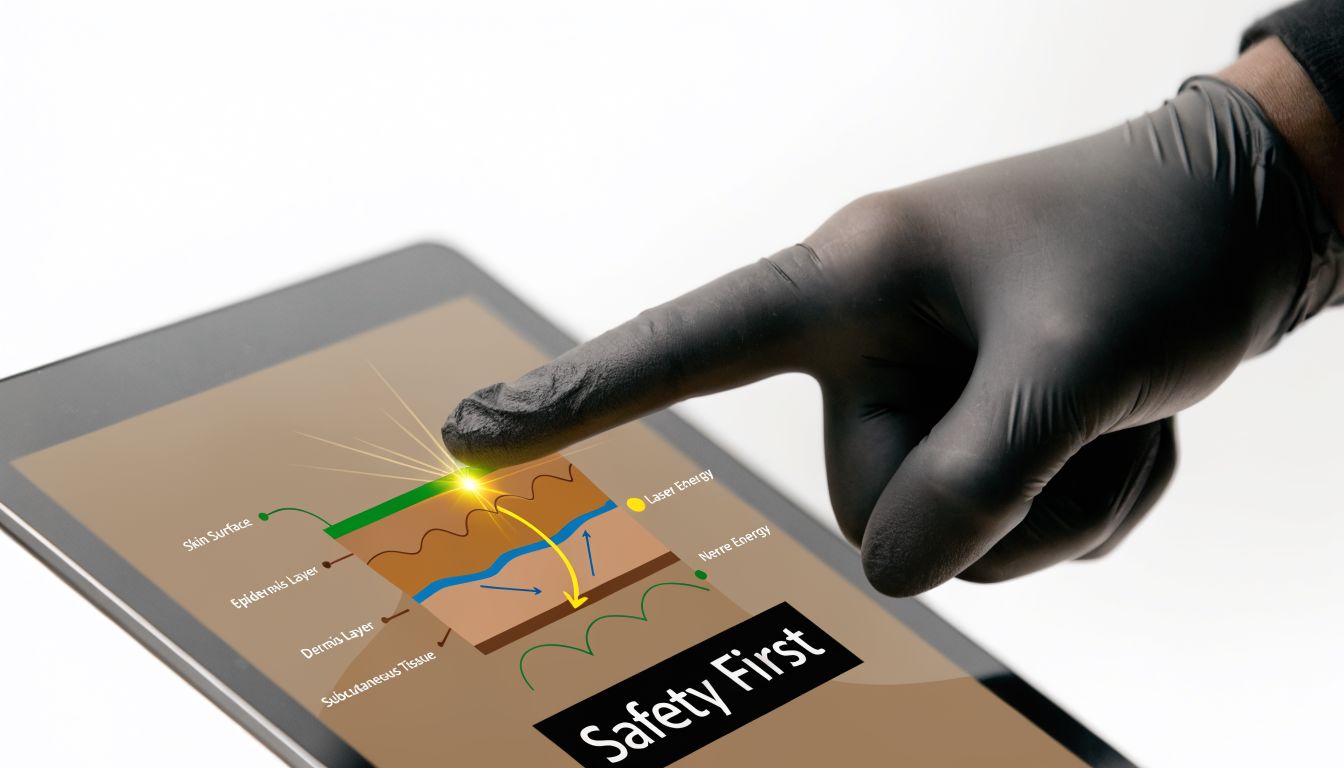
Safety starts with matching the settings to the person, not just the tattoo. Skin tone, ink colors, sun exposure, medical history, and the location of the tattoo all affect how cautiously and effectively treatment should be done.
Patients often worry that a slower plan means weaker treatment. In practice, spacing sessions out is part of responsible care. Your skin needs time to settle, and your body needs time to clear the shattered ink particles between visits. Pushing too fast is not the goal.
Comfort matters too. A proper consultation should cover what the treatment feels like, how the area is cooled, what normal healing looks like, and what signs mean you should check in. Clear instructions reduce anxiety because you know what is expected and what is not.
One option people in this area consider is EradiTatt Tattoo Removal, which offers laser tattoo removal in Bradenton using the PiQo4 platform. The useful question to ask any provider is straightforward. Can they explain, in plain language, why their device, settings, spacing, and aftercare plan fit your tattoo and your skin?
That is usually how you tell whether laser removal is the right choice for you. Not by a catchy starting price, and not by a promise of fast results, but by whether the plan is specific, realistic, and built around a safe path to the result you want.
Your First Step The EradiTatt Bradenton Consultation
Most local pages still miss the question people care about most. How long will this take for my tattoo? That answer doesn't come from a generic chart alone. It comes from seeing the tattoo in person, assessing the pigment, and matching the plan to your goal.
A transparent, in-person consultation is the most reliable way to get that answer why an in-person tattoo consultation matters.
What to bring to your visit
If you want the consultation to be useful, walk in with clear information.
- Your goal: Decide whether you want full removal or fading for a cover-up.
- Tattoo history: Be ready to share when you got it, whether it's been reworked, and whether it contains multiple colors.
- Your schedule reality: Think about sun exposure, vacations, workouts, and any event deadlines.
- Reference photos if needed: If the tattoo sits in an awkward spot, older photos can help show how it has changed.
For local scheduling, the Bradenton location is listed at 3825 E State Rd 64, Suite 200, Bradenton, FL 34208, and the direct phone number listed for that location is (941) 866-6744. Visits are available by appointment only, which usually makes for a calmer one-on-one setting.
Questions worth asking
A good consultation should leave you with a plan, not more confusion. Ask questions that help you make decisions:
- Am I a better candidate for full removal or fade-for-cover-up?
- Which colors in my tattoo may respond first, and which may take more patience?
- What healing pattern should I expect in this body area?
- What spacing between sessions makes sense for my tattoo?
- How will you adjust settings based on my skin and ink mix?
A strong consultation should feel like a roadmap. You should leave knowing the likely direction, the likely pace, and what could change along the way.
If you're searching laser tattoo removal near me Bradenton, this is the step that turns online research into an actual treatment plan.
Post-Treatment Success Essential Aftercare and FAQs
Good aftercare doesn't force fading. It supports clean healing so each session has the best chance to do its job.
Aftercare basics
- Keep it clean: Gently care for the treated area exactly as directed after your session.
- Protect the skin: Avoid direct sun on the area while it's healing.
- Leave it alone: Don't pick, scratch, or peel healing skin.
- Watch friction: Tight clothing and rubbing can irritate a fresh treatment site.
- Follow product instructions: Use only the aftercare products your provider recommends for that stage.
FAQs
Will my tattoo be 100% gone?
Sometimes clearance is dramatic. Sometimes faint residual pigment or shadowing remains. The true answer depends on the tattoo, the pigment load, and your endpoint goal.
Can I get a new tattoo in the same spot later?
Often yes, once the skin has healed appropriately and your provider says the area is ready. If you're fading for a cover-up, that timeline may be shorter than full removal.
Do old tattoos respond better?
Older tattoos can sometimes respond differently than newer, heavily saturated work, but age is only one factor. Ink density and design technique can matter more.
Why can't I come back too soon for the next session?
Because fading doesn't happen only in the treatment room. Your body needs time after the laser breaks the ink apart.
If you're ready to stop guessing and get a personalized answer, EradiTatt Tattoo Removal can help you assess your tattoo, your timeline, and whether full removal or cover-up fading makes more sense for your situation in Bradenton.