
A lot of people searching how to get rid of stick and poke tattoo are staring at a small mark that used to feel harmless. It may be on a finger, ankle, wrist, knee, or thigh. It may have come from a late night, a breakup, a dare, a dorm room, or a “why not” moment with a sewing needle and improvised ink.
Now it looks different.
Maybe the lines have blurred. Maybe the placement bothers you more than the design. Maybe your job, your style, or just your own taste changed. Whatever brought you here, the important part is simple. A stick-and-poke is a DIY tattoo, but removal should never be a DIY project.
That DIY Tattoo Seemed Like a Good Idea at the Time
The usual story is familiar. The tattoo happened fast, with very little planning. Someone had a needle, someone had ink, and the design felt small enough to ignore the risk. At the time, the tattoo felt personal, funny, rebellious, or temporary in spirit, even though it was still being placed in skin.
Months or years later, the feeling changes.

That reaction is common. 1 in 4 Americans (25%) say they regret at least one tattoo, and 51% don’t feel that regret until two or more years later, according to this tattoo regret data study. That delayed regret fits stick-and-poke tattoos especially well because they’re often impulsive.
Why regret shows up later
A tiny tattoo can feel easy to dismiss when it’s fresh. Then real life catches up.
- Work changes: Visible ink can become a problem when your role changes or you start interviewing.
- Style changes: What felt playful at one stage of life can look out of place later.
- Quality becomes obvious: Amateur tattoos often age in a way that makes flaws easier to see.
Practical rule: If the tattoo was done casually, removal needs the opposite approach. Careful assessment, sterile technique, and realistic planning.
People also tend to underestimate how risky DIY skin procedures can become once they move from “cosmetic fix” to actual tissue damage. If you’ve ever seen the pattern in other beauty treatments, this breakdown of the risks of hair removal at home makes the same larger point. Home methods often sound simple right up until they cause burns, irritation, or scarring.
That matters here because the urge to fix a DIY tattoo with another DIY method is strong. It’s also where many people make the problem worse.
A stick-and-poke can often be removed safely. The right starting point is understanding what kind of ink placement you’re dealing with, not attacking the skin and hoping the mark fades.
Assessing Your Stick and Poke Tattoo for Removal
Before any treatment plan makes sense, the tattoo has to be looked at correctly. Stick-and-pokes behave differently from professional tattoos because the ink usually isn’t sitting at one clean, consistent depth.
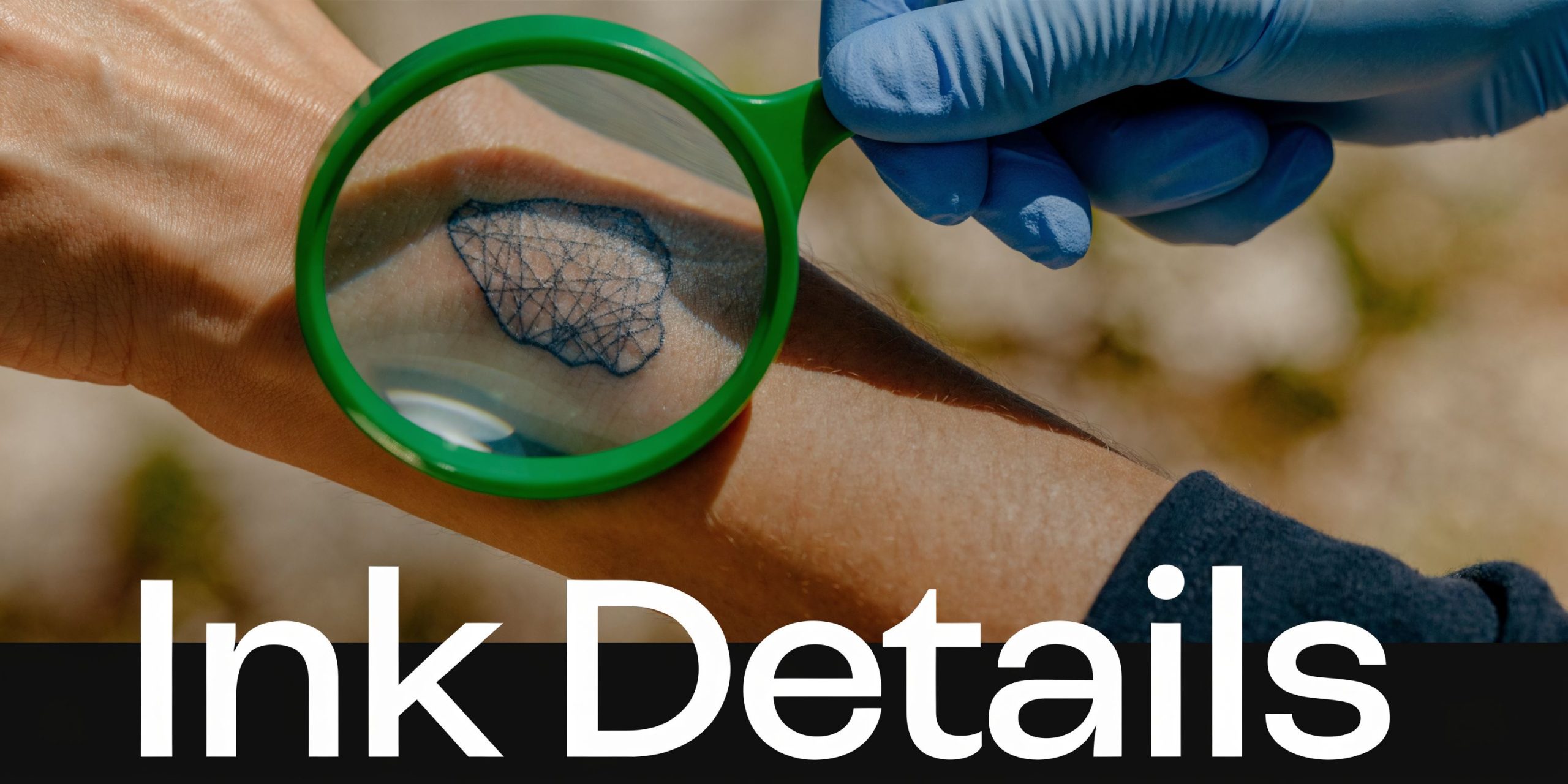
The biggest technical issue is uneven ink depth. That’s why stick-and-poke tattoos often need 6 to 10 sessions spaced at least 6 weeks apart, as explained in this overview of stick-and-poke tattoo removal. One part of the tattoo may sit superficially and respond quickly. Another part may be lodged deeper and fade more slowly.
What to look at before booking
A quick self-check helps you understand what a specialist will pay attention to.
- Age of the tattoo: Older stick-and-pokes sometimes look faded already, but faded doesn’t always mean easy. A patchy tattoo can still contain stubborn pockets of pigment.
- Placement on the body: Areas with more movement or friction can heal differently. Fingers, hands, feet, and ankles often require very careful expectation-setting.
- Color of the ink: Black and dark amateur ink usually respond differently from unusual pigments or mixed homemade inks.
- Line quality: If the lines look dotted, patchy, or blown out, that often signals irregular placement in the skin.
- Any existing scar texture: If the original tattooing process injured the skin, removal planning has to account for that.
What small tattoos get wrongfully labeled as easy
People assume a tiny tattoo means a tiny project. Sometimes that’s true. Sometimes it isn’t.
A very small stick-and-poke with erratic depth can be slower to clear than expected because treatment has to protect the skin while chasing ink that was never applied consistently in the first place. That’s one reason a proper professional skin consultation matters before any skin-based treatment. Skin condition, healing history, and pigment behavior all matter more than tattoo size alone.
If your tattoo is small, this guide to https://eraditatt.com/2026/02/02/small-tattoo-removal/ is useful because it helps frame what “small” does and doesn’t mean in a removal setting.
Don’t judge removability by how easy the tattoo was to give yourself. Amateur application often creates the exact irregularity that makes treatment planning more careful.
Questions worth asking yourself
Use these before your consultation:
- Was the tattoo done in one sitting or several?
- Do some parts look darker or thicker than others?
- Has the area ever raised, scarred, or stayed textured?
- Was the ink clearly tattoo ink, or something improvised?
- Are you aiming for full removal or just enough fading for a cover-up?
Those answers won’t replace an assessment, but they do help set expectations. The more uneven the tattoo, the more the treatment plan has to prioritize precision over speed.
Comparing Your Stick and Poke Removal Options
Individuals considering removal often look at more than one route. That’s reasonable. What isn’t reasonable is assuming every route carries the same level of risk.
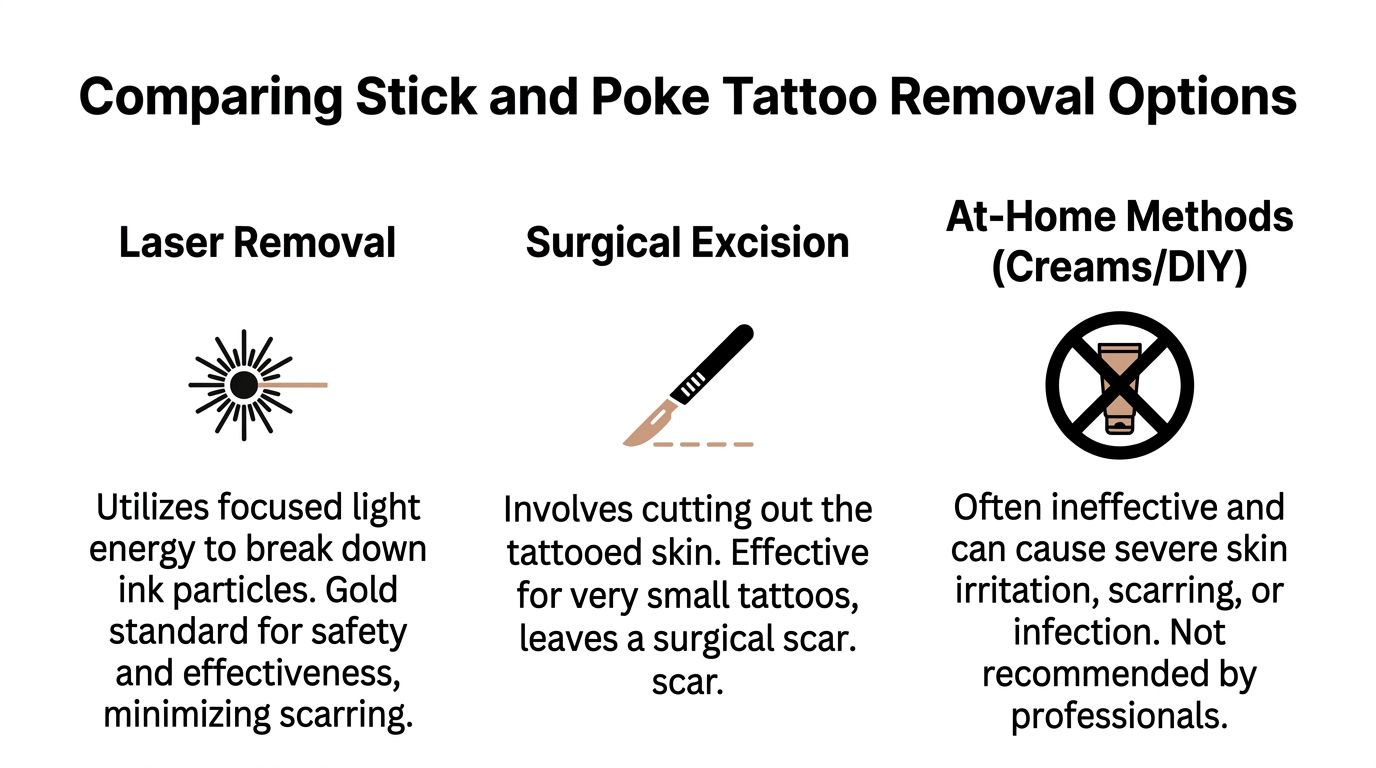
The options usually fall into three buckets. Professional laser removal, surgical excision for very small tattoos, and at-home methods such as creams, acids, dermabrasion tools, salt rubbing, or skin-picking routines disguised as “natural removal.”
Only one of those options fits most stick-and-poke tattoos safely.
What each option really means
Professional laser removal targets ink in the skin while trying to preserve surrounding tissue. It’s the standard approach for most unwanted stick-and-pokes because it allows gradual clearing rather than cutting or scraping away skin.
Surgical excision removes the tattoo by cutting out the tattooed skin and closing the area. For a very small tattoo, that can be appropriate in some medical settings, but it trades ink for a surgical scar.
At-home methods usually damage the skin surface and still fail to reach tattoo pigment predictably. People often end up with irritation, textural change, or a scar plus a still-visible tattoo.
Tattoo Removal Method Comparison
| Method | Effectiveness | Safety | Typical Cost |
|---|---|---|---|
| Laser removal | Best option for most stick-and-poke tattoos. Designed to break up ink gradually. | Strongest safety profile when performed by trained professionals with proper assessment and aftercare. | Varies by tattoo size, ink, skin type, and number of sessions. |
| Surgical excision | Can fully remove very small tattoos in selected cases. | Medically controlled, but leaves a surgical scar. Not suitable for many placements or larger designs. | Varies by provider, location, and whether pathology or medical closure is involved. |
| At-home creams and DIY methods | Unreliable. Often fails to remove pigment meaningfully. | Highest avoidable risk. Can cause irritation, infection, textural damage, and scarring. | Upfront cost may look low, but skin damage can make the actual cost much higher. |
Why laser is the practical choice
Laser treatment isn’t magic, and it isn’t instant. But it’s the only option that’s designed around how tattoo pigment sits in the skin.
At-home creams usually work at the surface, not where the ink lives. Salt abrasion, sanding, lemon juice, glycolic acid misuse, and “tattoo eraser” kits all share the same flaw. They try to remove pigment by injuring skin first.
If a home method claims to dissolve a tattoo without a real assessment, the skin pays the price before the ink does.
That trade-off is especially bad for stick-and-pokes. Amateur tattoos may be superficial in places, but they’re also unpredictable. Scraping the skin won’t selectively target the deeper specks of pigment. It just creates inflammation on top of irregular ink.
What doesn’t work well in real life
People often ask whether they can fade a stick-and-poke enough with home products to avoid laser. In practice, that usually means one of three outcomes:
- The tattoo barely changes
- The skin gets darker, rougher, or irritated
- A future laser specialist has to work around avoidable skin damage
Surgical excision has a place, but only in narrow situations. If the tattoo is extremely small and in a suitable area, a medical professional may discuss it. For many seeking to remove a stick and poke tattoo safely, the better balance of skin preservation and pigment targeting comes from laser treatment.
The key difference is control. A clinic can adjust the approach to your ink, your skin, your healing, and your goal. A tube, scrub, or internet hack can’t.
The Professional Laser Removal Process Explained
A proper removal plan starts before the laser ever fires. The consultation matters because a stick-and-poke isn’t just “a small tattoo.” It’s a pattern of inconsistent pigment in living skin, and every variable changes how treatment should be done.
What happens at consultation
The first appointment usually focuses on the tattoo’s depth, color, age, placement, and your skin type. A specialist also checks for scar tissue, textural change, and any skin conditions that could affect healing.
The discussion should be direct. Not every tattoo clears the same way. Not every area heals the same way. If a clinic promises instant removal, that’s a warning sign.
This page on the https://eraditatt.com/2025/12/08/laser-tattoo-removal-process/ gives a useful client-side view of how treatment planning typically works from consultation through follow-up.
What the laser is doing
For stick-and-poke removal, clinics use Q-switched or picosecond lasers that deliver ultra-short energy pulses to shatter tattoo pigment. For amateur tattoos, clinics can often reach 85% to 95% clearance in 3 to 6 sessions, compared with 10 to 15 sessions that professional tattoos may require, according to this explanation of how to get rid of a stick and poke.
That doesn’t mean every stick-and-poke is easy. It means amateur tattoos can respond well because they’re often less saturated and more superficial than machine-applied work. The unevenness still requires judgment.
What a treatment session feels like
A typical session is short, especially for a small tattoo.
The skin is assessed first. Protective eyewear is used. The provider selects settings based on the tattoo and the surrounding skin, then treats the area in controlled passes. Immediately after treatment, the skin may look whitened or “frosted,” then red or irritated.
Common sensations include:
- Quick snapping heat: Many people compare it to a rubber band with heat.
- Brief intensity: The treatment itself is usually much shorter than clients expect.
- Lingering tenderness: The area can feel sunburned or irritated afterward.
A good session isn’t the most aggressive session. It’s the session that moves the process forward without creating unnecessary skin trauma.
Why multiple sessions are necessary
Once the laser breaks pigment into smaller fragments, your body has to clear those fragments over time. That process doesn’t happen in a day.
A stick-and-poke may also contain shallow spots that fade early and denser pockets that remain. That’s normal. Removal rarely happens in a perfectly even visual pattern.
What experienced practitioners watch for
The treatment plan often changes as the tattoo fades.
Some areas may clear quickly. Others may reveal old blowout, hidden density, or textural changes that weren’t obvious when the tattoo was darker. This is why responsible laser work is progressive rather than rushed.
A careful provider will pay attention to:
- Ink response after each session
- How your skin heals between sessions
- Whether the goal is full clearance or cover-up fading
- Any sign that settings or spacing should be adjusted
That measured approach is what makes professional removal safer than trying to force rapid fading. The laser isn’t just “removing the tattoo.” The provider is balancing pigment breakup with skin recovery every step of the way.
Recovery and Aftercare for Best Results
The treatment gets the process started. Aftercare is what protects the skin while that process continues.
Right after a session, the area may look pale, raised, red, or slightly swollen. Over the next stretch of healing, the skin can feel dry, warm, tender, or itchy. Some clients see minor blistering or scabbing. That can be part of normal healing when it’s managed correctly.
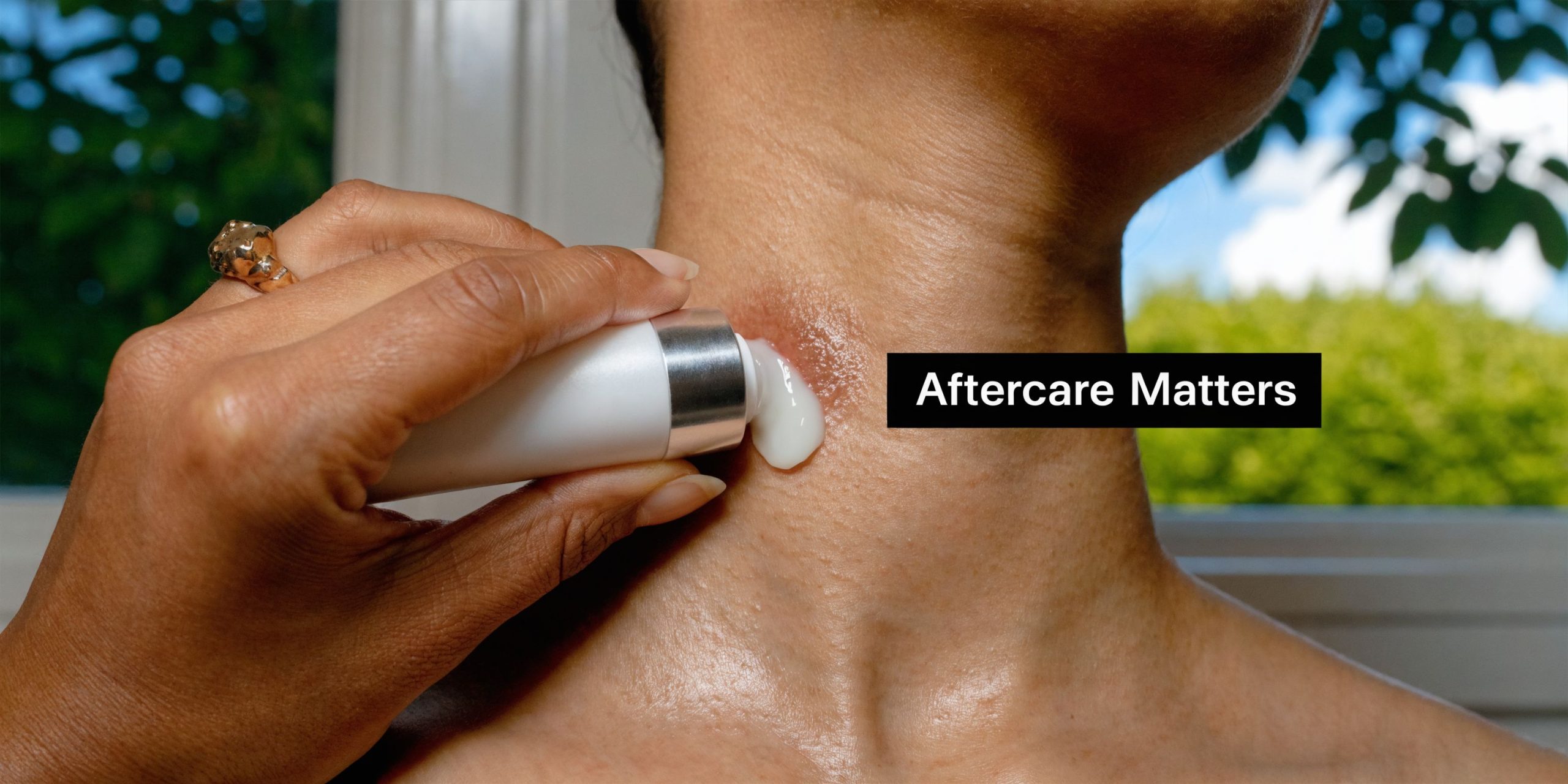
A lot of poor outcomes happen after a technically good session because the treated area gets picked, soaked, over-treated, or exposed to too much sun. That’s why detailed aftercare matters. This article on https://eraditatt.com/2026/01/16/why-aftercare-is-important-after-laser-tattoo-removal/ is worth reading if you want a fuller breakdown of why healing behavior affects the final result.
What to do after treatment
- Keep it clean: Wash gently when your provider says it’s appropriate. Don’t scrub.
- Protect the surface: Use only the ointment or dressing guidance given by your clinic.
- Let blisters alone: Intact blisters protect healing skin. Popping them raises the risk of irritation and scarring.
- Reduce friction: Tight clothing, gym equipment rubbing, or constant touching can slow healing.
- Avoid sun exposure: Treated skin is more vulnerable while healing.
What to avoid
- No picking: Scabs and flakes should come off on their own.
- No swimming or soaking early in healing: Pools, hot tubs, lakes, and baths can irritate the area.
- No harsh products: Acids, retinoids, exfoliants, and bleaching products have no place on fresh laser-treated skin.
- No “helpful” home remedies: Toothpaste, essential oils, alcohol, salt, and peroxide often create more inflammation.
What normal healing can look like
Healing isn’t always pretty. Temporary redness, tenderness, dryness, and surface changes can all happen as the skin settles.
What matters is whether the area is trending toward calm, not whether it looks perfect immediately.
Treated skin needs quiet healing. Most aftercare mistakes come from doing too much, not too little.
When to contact the clinic
Reach out if something feels off, especially if symptoms are worsening rather than easing.
Watch for:
- Increasing pain instead of gradual improvement
- Spreading redness
- Drainage that concerns you
- Unexpected skin reaction beyond what your provider described
A good aftercare plan is simple, boring, and consistent. That’s usually what produces the best cosmetic outcome.
Special Considerations for Safe Tattoo Removal
Not every skin type should be treated the same way. That matters even more with stick-and-pokes because the pigment placement is already inconsistent.
Clients with darker skin tones need an approach that respects the skin’s melanin response. According to this guidance on stick-and-poke tattoo removal for darker skin, specialists often use lower-fluence Q-switched Nd:YAG lasers and 8 to 12 week intervals between sessions to reduce the risk of hypopigmentation. With these specialized protocols, significant clearance can be achievable for black ink on Fitzpatrick IV-VI skin.
Why one-size-fits-all treatment fails
Darker skin can be treated safely, but not casually.
A provider has to consider how the laser energy interacts with both tattoo pigment and natural skin pigment. Aggressive settings that might be tolerated elsewhere can create avoidable lightening or irritation in melanin-rich skin.
Skin conditions also change planning. If someone has eczema, a history of herpes outbreaks in the area, unusual reactivity, or existing inflammatory skin issues, the consultation needs to account for that before treatment starts.
What safer customization looks like
- Longer spacing between sessions: More healing time can reduce complications.
- Conservative energy selection: Slower progress is often the safer choice.
- Close skin monitoring: The response after each session guides the next one.
- Coordination with a dermatologist when needed: Especially for active skin conditions or complex healing histories.
The right specialist won’t use generic reassurance. They’ll explain the plan, the trade-offs, and the reason your settings may differ from someone else’s.
Your Path to Clear Skin Starts Here
If you want to get rid of stick and poke tattoo safely, the answer isn’t a cream, scrub, acid, or internet hack. It’s a professional assessment and a treatment plan built around your skin and your tattoo.
Stick-and-poke regret is common. Safe removal is possible. The biggest mistake is trying to erase DIY ink with more DIY damage.
A consultation gives you the part that guesswork can’t. Real answers about likely sessions, skin safety, fading potential, and whether full removal or cover-up prep makes more sense.
If you’re ready for a professional opinion, EradiTatt Tattoo Removal can help you take the next step toward clear skin. With multiple Florida locations and a straightforward, supportive approach, the team can assess your stick-and-poke, explain realistic treatment options, and map out a removal plan that puts skin safety first.