
You're probably here because a tattoo that once felt right doesn't fit anymore. Maybe it reminds you of a relationship that ended, a job you've outgrown, a design that aged poorly, or a version of yourself you're done carrying. In Tampa, that decision usually starts the same way. You look at the tattoo in the mirror, then start wondering what removal would involve, how long it takes, and whether your skin will handle it well.
The good news is that laser tattoo removal isn't a mystery process anymore. With the right technology and a realistic plan, unwanted ink can be treated in a way that's structured, gradual, and customized for your skin and your goal. If you want a broad overview first, this guide on how to remove a tattoo in Tampa is a useful starting point.
Table of Contents
- Starting Your Tattoo Removal Journey in Tampa
- How Laser Tattoo Removal Works with PiQo4 Technology
- Your Tattoo Removal Timeline and Expected Results
- Understanding Tattoo Removal Costs in Tampa
- How to Prepare for Your Session and Aftercare Essentials
- Book Your Tampa Consultation and Next Steps
- Frequently Asked Questions About Tattoo Removal
- Does laser tattoo removal hurt
- Can blue and green ink be removed
- Are older tattoos easier to remove
- Is cover-up fading faster than complete removal
- Can darker skin tones be treated safely
- What if my tattoo has both black and color ink
- Will one session tell me everything
- What's the biggest mistake people make
Starting Your Tattoo Removal Journey in Tampa
A lot of people searching for Tattoo Removal Tampa FL aren't starting from zero. They've already spent months, sometimes years, thinking about it. The tattoo may not be terrible. It just doesn't belong anymore.
In practice, that matters. Removal isn't only about erasing ink. It's about matching the treatment plan to the reason you want the tattoo gone or faded. Someone preparing for a cover-up needs a different endpoint than someone who wants the skin as clear as possible. Someone with a deadline tied to work, enlistment, or a life event needs a different conversation than someone who can take a slower route.
Why the first decision isn't the laser
The first real decision is your goal.
If you want a fresh canvas for a new piece, partial fading may be the smarter route. If the tattoo sits on darker skin or includes stubborn color mixes, the plan should focus on safety and predictability before speed. If the tattoo is dense, layered, or heavily saturated, expecting one or two quick visits usually leads to frustration.
Most removal plans work better when they start with a clear endpoint instead of a guess about session count.
That's why consultations should focus on what the tattoo looks like now, what outcome you want, and what factors could slow or complicate clearance. In Tampa, sun exposure is also part of that conversation. Skin condition matters before any device touches it.
What people usually get wrong
The most common mistake is shopping for a universal answer. There isn't one. Two tattoos that look similar at first glance can behave very differently once treatment starts.
A practical starting checklist looks like this:
- Define the goal: Complete removal, meaningful fading, or cover-up prep.
- Look at the ink mix: Black ink often behaves differently from multicolor work.
- Consider skin tone: Skin phototype affects how conservative or aggressive treatment should be.
- Think about timing: Don't build your expectations around the fastest story you've heard from someone else.
When people approach tattoo removal this way, the process feels less overwhelming and much more manageable.
How Laser Tattoo Removal Works with PiQo4 Technology
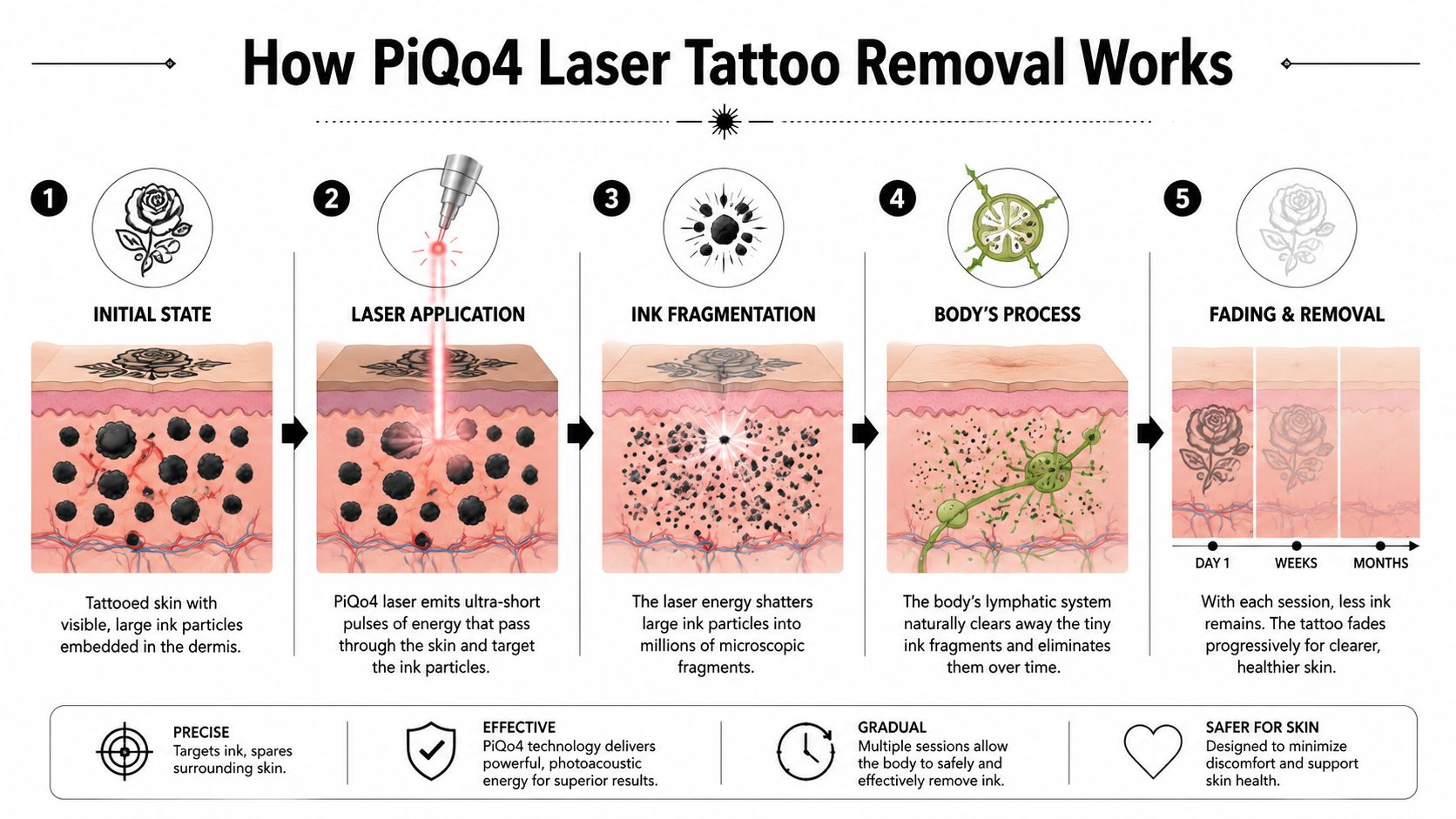
Laser tattoo removal works by breaking ink into fragments small enough for your body to gradually clear. The easiest way to think about it is this. A tattoo contains larger pigment deposits sitting in the skin. The laser hits those deposits and breaks them into much smaller pieces, more like pebbles than rocks. Your immune system then does the slow cleanup work over time.
That's the reason results don't show up all at once. The laser starts the process. Your body finishes it.
What PiQo4 changes
PiQo4 matters because not all tattoo lasers behave the same way. Older systems can remove ink, but they often need more sessions and may be less flexible with certain colors and treatment goals. Tampa-area provider guidance notes that with advanced picosecond technology, most patients may need about 4 to 6 treatments for significant or complete removal, compared with up to 12 sessions for older laser systems, according to this Tampa picosecond laser overview.
That doesn't mean every tattoo will clear in that range. It means the technology can shift the odds in your favor when the tattoo, skin, and treatment plan are a good match.
If you want a deeper technical breakdown, this explainer on PiQo4 laser tattoo removal gives more detail on how the platform is used.
Why precision matters more than brute force
The people who get the smoothest experience usually understand one thing early. Stronger isn't always better. Smarter targeting is better.
PiQo4 is useful because tattoo removal isn't a one-variable problem. The plan has to account for:
- Ink color: Some pigments respond faster than others.
- Ink depth: Professional tattoos often sit differently in the skin than amateur work.
- Density: Packed, layered ink takes a different approach than lighter shading.
- Skin type: Safer settings and wavelength choices matter.
Practical rule: The right setting is the one that moves the tattoo forward without creating unnecessary skin stress.
This is where a technician's judgment matters. A good treatment plan doesn't chase an impressive first session. It aims for steady fading, skin recovery, and consistent progress.
What actually works
What works is individualized treatment using the right wavelength, pulse approach, and spacing for the tattoo in front of you. What doesn't work is assuming every black tattoo clears the same way, every blue or green section will respond quickly, or every client should be treated on the same schedule.
That's one reason people choose providers that use modern equipment such as EradiTatt Tattoo Removal, which offers PiQo4-based treatment in Tampa. The device is only part of the equation, but it does expand what can be done with color range, efficiency, and treatment planning.
Your Tattoo Removal Timeline and Expected Results
A common initial question is: How long is this going to take?
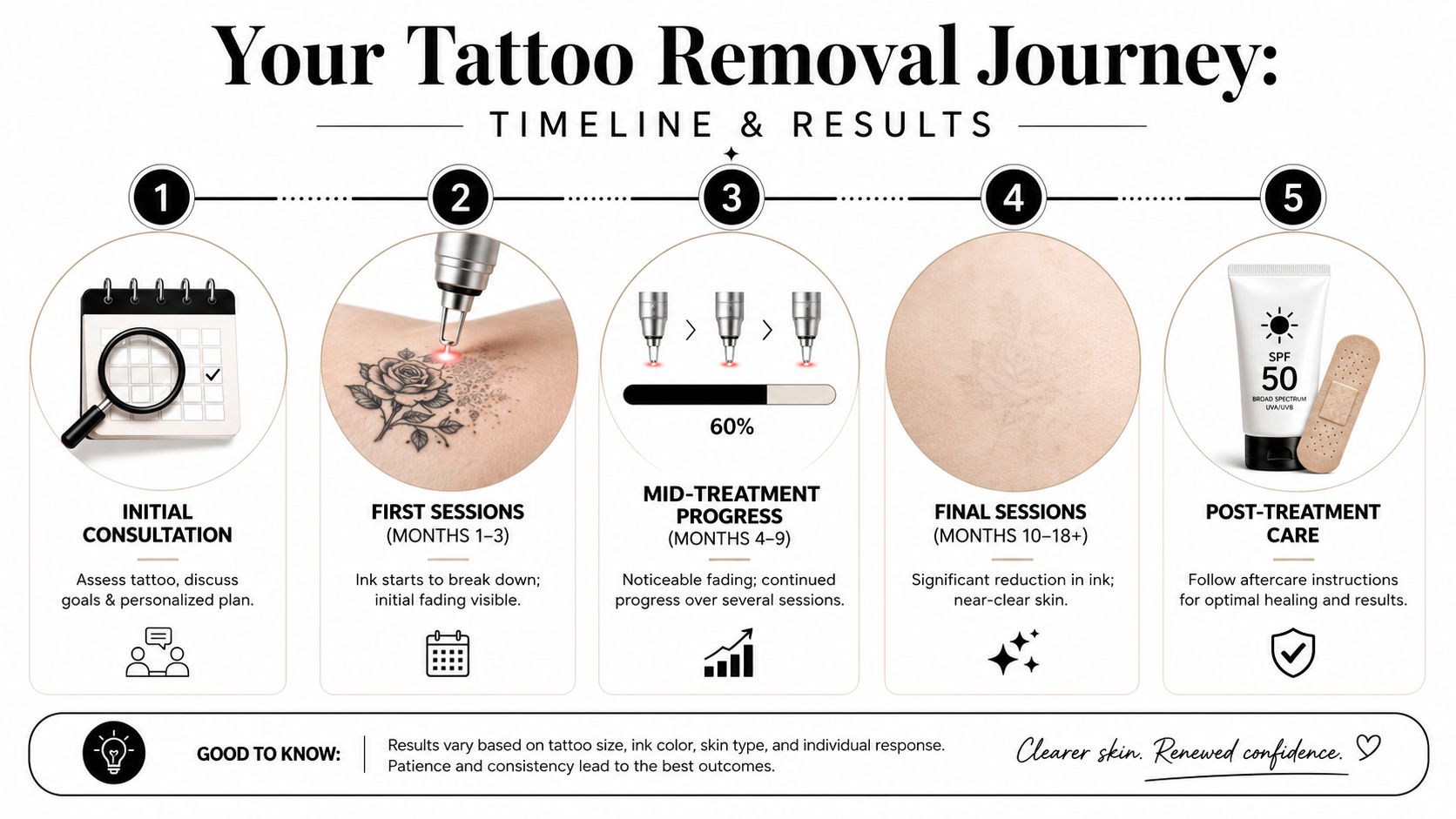
The honest answer is that tattoo removal is a staged process, not a single event. For complete removal, one Tampa source notes that tattoos often average 8 to 12 treatments, while fading for a cover-up can take fewer sessions, according to this Tampa removal page. That range is useful because it sets expectations where they should be. Progressive and personalized.
What the process usually looks like
At the beginning, the tattoo is assessed for color, density, location, skin tone, and end goal. That first evaluation matters because it's where realistic pacing gets established.
After the initial treatment, it's common for the tattoo not to vanish. Instead, fading happens in stages. Some sections respond first. Others lag behind. Areas with lighter shading may soften earlier than heavily packed outlines. A cover-up candidate may reach its goal long before a full-clearance candidate would.
A practical way to think about the timeline:
- Early phase: The tattoo begins responding, but changes can look subtle.
- Middle phase: Fading becomes more visible and uneven sections start to level out.
- Late phase: Remaining pigment is often the most stubborn, and progress can feel slower even when treatment is working.
Why two tattoos can move at different speeds
The treatment count isn't just about size. A small tattoo can be stubborn if it's saturated, layered, or made with colors that resist clearance. A larger tattoo with lighter pigment may sometimes progress more smoothly.
The variables that usually matter most are:
| Variable | Effect on Timeline |
|---|---|
| Ink density | Denser tattoos usually need a longer plan |
| Color mix | Multicolor work can be slower and more selective |
| Tattoo age | Older ink may respond differently than newer work |
| Placement | Areas with different circulation can fade differently |
| Goal | Cover-up fading often finishes sooner than full removal |
The most useful question isn't “How many sessions does tattoo removal take?” It's “How much fading do I need for my specific goal?”
What results should look like
Expected results should be framed around progress, not perfection after one visit. Good treatment looks like gradual reduction in visible pigment while the skin recovers normally between sessions.
If your goal is a cover-up, the right endpoint is often “light enough for the artist to work with,” not “completely gone.” If your goal is full removal, patience becomes part of the treatment itself. The process rewards consistency more than speed.
Personalized planning matters most. A realistic timeline is built from your tattoo's actual characteristics, not from someone else's before-and-after story.
Understanding Tattoo Removal Costs in Tampa
Tattoo removal pricing makes more sense once you stop thinking of it as one total number and start thinking in per-session terms. In the Tampa area, average tattoo removal pricing is typically $100 to $375 per treatment depending on tattoo complexity, according to this Tampa pricing reference.
That range is broad for a reason. Cost follows complexity.
What drives the price up or down
A simple black tattoo with lighter saturation is usually easier to plan for than a multicolor, dense, professionally packed piece. The session price reflects how much work the laser has to do and how carefully the treatment has to be customized.
Here's a practical comparison.
| Factor | Low Complexity (Fewer Sessions) | High Complexity (More Sessions) |
|---|---|---|
| Size | Small treatment area | Larger treatment area |
| Ink color | Mostly dark, straightforward pigment | Mixed colors with harder-to-clear tones |
| Ink density | Light to moderate saturation | Heavy, packed, or layered saturation |
| Goal | Partial fading for a cover-up | Full removal |
| Skin planning | More straightforward setup | More cautious parameter selection |
How to budget realistically
The mistake people make is comparing a single-session quote without asking what outcome that session price is attached to. A lower price per visit doesn't help much if the plan is inefficient, poorly matched to the tattoo, or likely to drag out.
A better way to budget is to ask:
- What is the goal: Full removal or cover-up fading?
- What type of tattoo is this: Dense professional work, older ink, or something more lightly applied?
- What technology is being used: This affects how efficiently the tattoo may respond.
- How customized is the plan: Generic treatment often becomes expensive in the long run.
For a focused look at local pricing logic, this article on tattoo removal cost in Tampa helps frame what you're paying for.
Cost is only one part of the decision
Price matters. It should.
But clients aren't paying just to fire a laser at ink. They're paying for assessment, skin judgment, device selection, session planning, and aftercare support. When a treatment plan is built correctly from the start, the investment usually feels more predictable and less stressful.
How to Prepare for Your Session and Aftercare Essentials
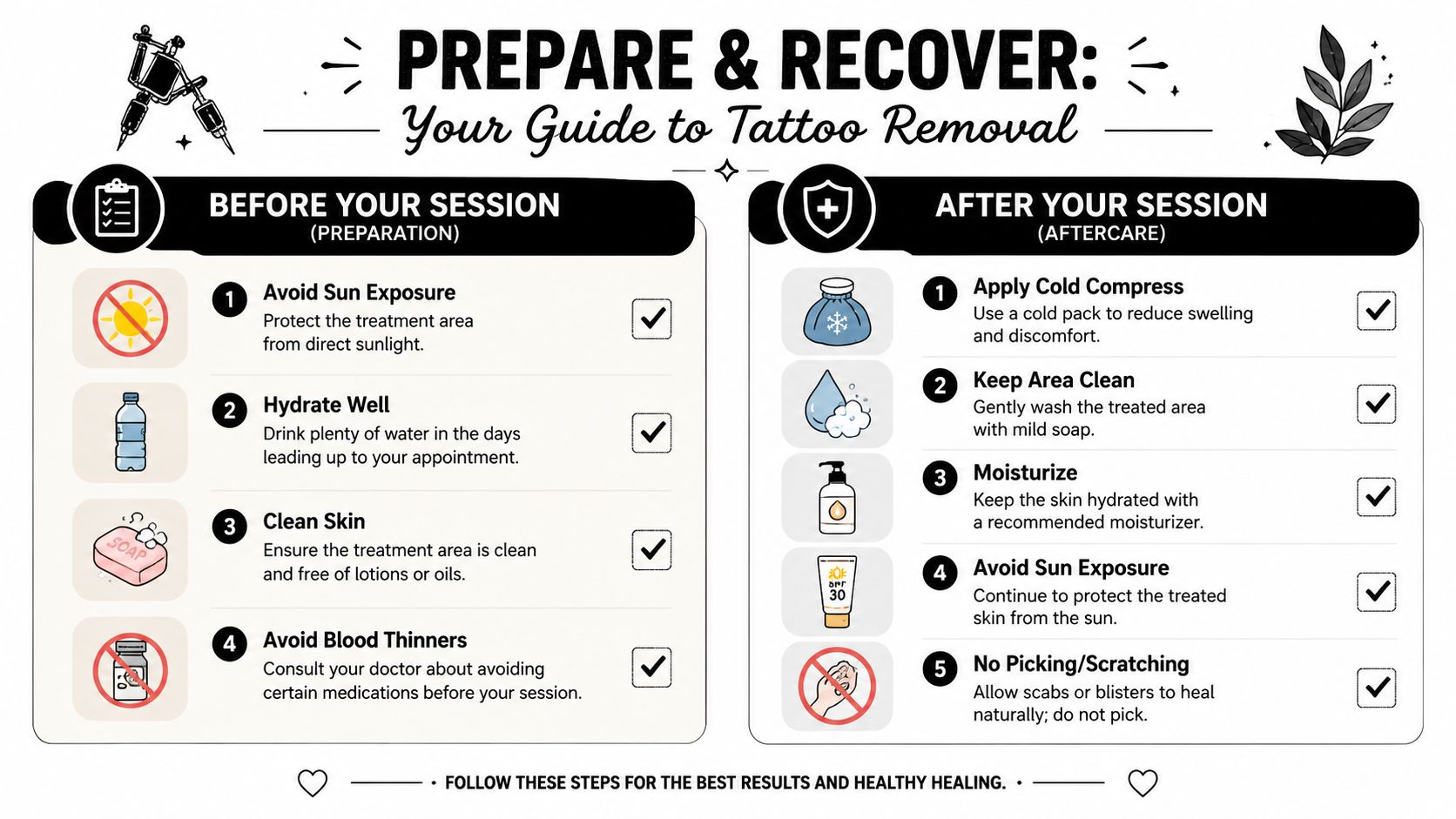
Preparation affects outcomes more than most first-time clients expect. Better skin condition at the start usually means a smoother session and a cleaner recovery afterward.
One Tampa provider notes that suntanned or spray-tanned skin should not be treated and recommends waiting 2 to 3 weeks for tan color to fade. The same source notes that healing is typically complete within about 4 weeks with proper aftercare, according to this Tampa aftercare guidance.
Before your appointment
Florida sun is one of the biggest practical issues in tattoo removal. Fresh tan, recent sun exposure, and self-tanner all make treatment riskier because extra pigment in the skin can interfere with safe laser targeting.
Use this simple prep checklist:
- Protect the area from sun: If the skin is tanned, wait until it returns closer to baseline.
- Arrive with clean skin: Skip lotions, oils, and anything occlusive on the treatment area.
- Hydrate normally: Well-hydrated skin generally handles procedures better.
- Disclose medications and skin history: If something affects healing, your provider needs to know before treatment.
What you may notice right after treatment
Immediate whitening can happen right after the laser pass. Temporary swelling is also common. Neither response means something went wrong. They're typical short-term treatment effects when the session is performed properly and the skin is reacting as expected.
Protecting the treated area from sun before and after sessions is one of the simplest ways to avoid preventable complications.
The treated tattoo usually continues changing over the following weeks. That part is important. The visible result isn't finished when you leave the office.
Aftercare that actually helps
Aftercare doesn't need to be complicated, but it does need to be consistent.
Focus on the basics:
- Keep it clean: Use gentle cleansing rather than aggressive scrubbing.
- Let the skin recover: Don't pick at any dry or healing areas.
- Use cold support if needed: A cool compress can help calm temporary swelling.
- Avoid more sun exposure: Healing skin is more reactive and needs protection.
What doesn't help is friction, heat, unnecessary irritation, or trying to speed up the process at home. The body needs time to clear fragmented pigment and settle inflammation. Most poor healing stories trace back to treating the area too casually in the days after a session.
Book Your Tampa Consultation and Next Steps
A consultation is where general advice stops and your actual plan begins. That matters even more if your tattoo includes multiple colors, sits on darker skin, or needs to be faded in a way that lines up with a cover-up schedule.
Independent guidance notes that outcomes can vary by skin phototype and ink color, so a professional consultation is essential to assess risk and build a safe plan, especially for higher Fitzpatrick skin types, as explained in this skin-tone safety overview.
Who should book a consultation
You're a strong candidate for a consult if any of these sound familiar:
- You want a cover-up plan: You need to know how much fading is enough, not just whether removal is possible.
- You have color in the tattoo: Green, blue, and mixed pigments need careful evaluation.
- Your skin tans easily: This affects timing and treatment safety.
- You have a deadline: Work, enlistment, weddings, or personal milestones change the planning conversation.
Tampa location and what to do next
For Tampa-area clients, the clinic location is 1715 N Westshore Blvd, Ste 100, Tampa, FL 33607. That makes it a practical option for people in Tampa, Clearwater, Brandon, and nearby communities who want a dedicated removal consultation without guessing their way through the process.
The simplest next step is to schedule through the main website or call the clinic support line listed there so the team can review your tattoo, your skin, and your goal. If you run a local business and care about how service businesses become easier to find online in this area, this local SEO guide for Tampa Bay businesses is also a useful side read because it explains how local search behavior shapes who people find first.
A good consultation should leave you with a treatment strategy, not just a quote.
If you're unsure whether you want fading or full removal, that's fine. That's exactly what the consult is for.
Frequently Asked Questions About Tattoo Removal
Does laser tattoo removal hurt
The sensation is described as sharp, quick, and very manageable when the session is performed efficiently. The sensation is different from getting tattooed. Removal is usually shorter, but the laser energy feels more sudden. Comfort measures can make a noticeable difference, especially on sensitive areas.
Can blue and green ink be removed
They can often be treated, but they're also the colors that deserve careful planning. Some pigments are more stubborn than standard dark ink, which is why color mix matters during consultation. Modern laser platforms are beneficial, but the actual result still depends on pigment type, depth, and how your skin responds.
Are older tattoos easier to remove
Sometimes, but not always. Older tattoos may already show natural fading, which can help. At the same time, old professional ink can still be dense and persistent. Age is one factor. It isn't a guarantee.
Is cover-up fading faster than complete removal
Often, yes. A cover-up usually doesn't require the tattoo to disappear completely. The goal is to lighten the original design enough that a tattoo artist can work over it cleanly. That endpoint can arrive much sooner than full clearance.
Can darker skin tones be treated safely
Yes, but the plan has to be built with skin tone in mind. Wavelength choice, treatment settings, and conservative pacing matter more when pigment change is a concern. That's why a real assessment matters more than a generic promise.
What if my tattoo has both black and color ink
That's common. Mixed tattoos usually need a more selective approach because different pigments can respond at different speeds. One section may fade quickly while another lingers. That doesn't mean the treatment isn't working. It means the tattoo is behaving like a mixed tattoo.
Will one session tell me everything
It'll tell you something, but not everything. Early response can be helpful, yet tattoos reveal their true pace over time. A smart plan watches how the ink breaks apart, how the skin heals, and which areas need adjustment.
What's the biggest mistake people make
Rushing. They either start treatment with a fresh tan, expect instant clearance, or choose a plan based on the shortest promise instead of the safest path. Removal works better when the goal is clear and the schedule respects how skin heals.
If you're ready to talk through your tattoo, skin type, and whether full removal or fading makes more sense, schedule a consultation with EradiTatt Tattoo Removal. It's the easiest way to get a practical plan built around your tattoo instead of a generic estimate.