
You're probably here because a tattoo that once made sense doesn't anymore. Maybe it's tied to a relationship that ended, a job requirement that changed, a design that aged badly, or a cover-up plan you're finally ready to start. If you've been searching for tattoo removal near me in St. Pete, what you likely want isn't hype. You want clear answers about what works, how long it takes, and whether your tattoo is a good candidate.
That's the part many people don't get before they book. They see a laser, hear that modern technology can fade ink, and assume the process is quick. Then key questions arise. How many appointments will this take? How far apart do they need to be? Will black ink behave differently than bright colors? Is full removal the goal, or do you only need enough fading for a strong cover-up?
This guide is built around those practical decisions. It's written the way I'd explain the process to someone sitting in our St. Pete clinic, looking down at a tattoo and trying to decide what comes next.
Table of Contents
- Your Fresh Start Begins in St Pete
- How Laser Tattoo Removal Really Works
- Your Tattoo Removal Journey in St Petersburg
- Factors That Influence Your Results and Pricing
- Complete Removal vs Cover-Up Fading
- Why Choose EradiTatt for Tattoo Removal in St Pete
- Frequently Asked Questions About St Pete Tattoo Removal
Your Fresh Start Begins in St Pete
You notice it during ordinary parts of the day. Pulling on a work shirt. Checking the mirror before dinner on Central. Standing in line for coffee and catching a glimpse of old ink that no longer fits who you are.
That moment usually comes with a practical question, not a dramatic one. Is full removal the right move, or do you only need enough fading to open up better cover-up options?
People come in with very different reasons. Some want a tattoo gone because it feels out of step with their life now. Some need to clean up a visible area for work. Others already have a new design planned and want to fade the existing piece without spending time and money chasing complete removal they do not need.
Your search for tattoo removal near me in St. Pete probably means you want more than a clinic close to home. You want honest guidance about what your tattoo is likely to do under treatment, how long the process may take, and what result makes sense for your timeline. A closer look at tattoo removal options in St. Petersburg can help you start with the right questions.
The first useful consultation is about the goal, the timeline, and the limits of the tattoo. Sessions come after that.
That conversation matters. A small black script name on the ankle and a layered color piece on the forearm do not follow the same plan, respond at the same speed, or carry the same budget. Good treatment planning starts with the ink you have, the skin we are treating, and the deadline you are trying to meet. When those pieces are clear, the process feels a lot less uncertain.
How Laser Tattoo Removal Really Works
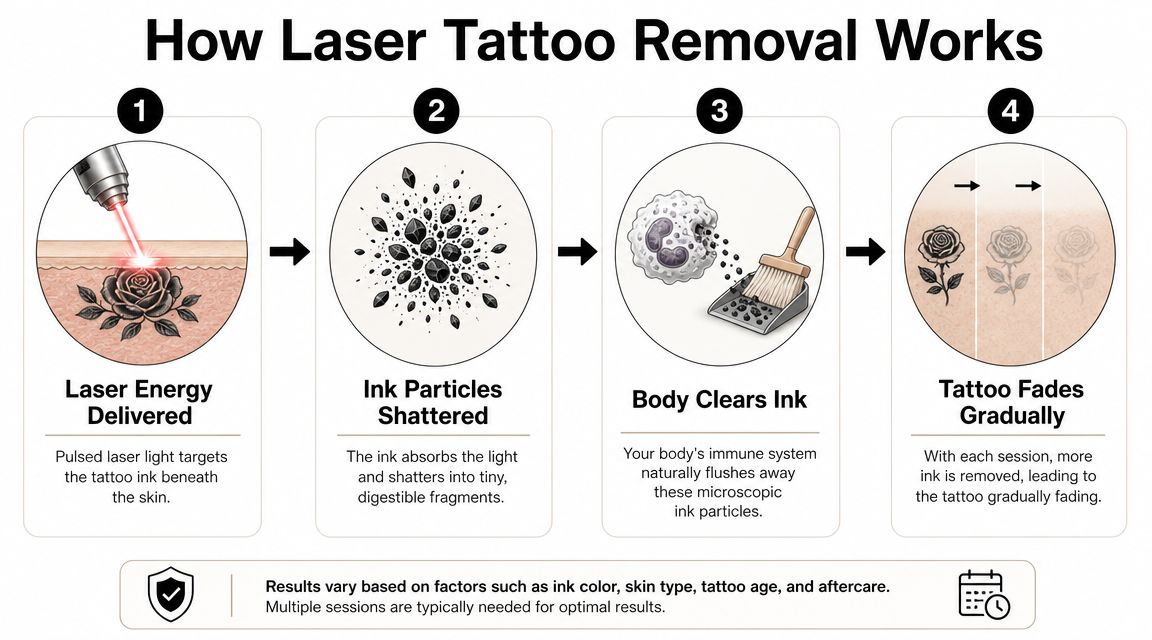
What the laser is actually doing
Laser tattoo removal works by sending light energy into the skin at settings chosen for the tattoo's pigment. The ink absorbs that energy. The laser doesn't “vacuum” the tattoo out. It breaks the pigment into much smaller fragments, and your body gradually clears those fragments over time.
The easiest way to think about it is this. Tattoo ink starts as larger debris sitting in the skin. The laser turns that debris into much smaller pieces that your system can process more effectively. That's why fading happens gradually instead of all at once.
With modern systems like the PiQo4, treatment can be highly targeted and controlled. Different pulse durations and settings let the practitioner match treatment to the ink rather than blasting everything the same way. That precision matters because tattoo removal is part technology and part judgment. Good treatment plans respect both.
You may also hear the term frosting during treatment. That's the temporary white, cloudy look that can appear right after the laser hits the tattooed area. It's a normal treatment response and one of the signs that energy is interacting with the pigment in the skin.
Why different colors need different settings
Not all ink behaves the same way. A key technical benchmark in tattoo removal is wavelength choice. 1064 nm is used more effectively for darker inks, while 532 nm is better suited for brighter colors because tattoo removal depends on wavelength-specific absorption of pigment, as noted in this explanation of laser wavelength choice in tattoo removal.
That's why one-size-fits-all treatment doesn't make sense. A faded black tattoo and a bright, multicolor piece don't need the same approach.
A strong treatment plan usually accounts for:
- Ink color: Darker pigments and brighter pigments respond differently.
- Ink density: Packed, saturated tattoos often need more patience.
- Tattoo depth: Professional work can sit differently in the skin than lighter work.
- Skin response: Healing and fading happen on the body's timetable.
Practical rule: The laser is only one part of removal. The other part is the body's ability to clear what the laser has already broken apart.
That's also why rushed treatment tends not to produce better outcomes. When people understand the science, they usually stop expecting instant disappearance and start focusing on steady, safe fading.
Your Tattoo Removal Journey in St Petersburg
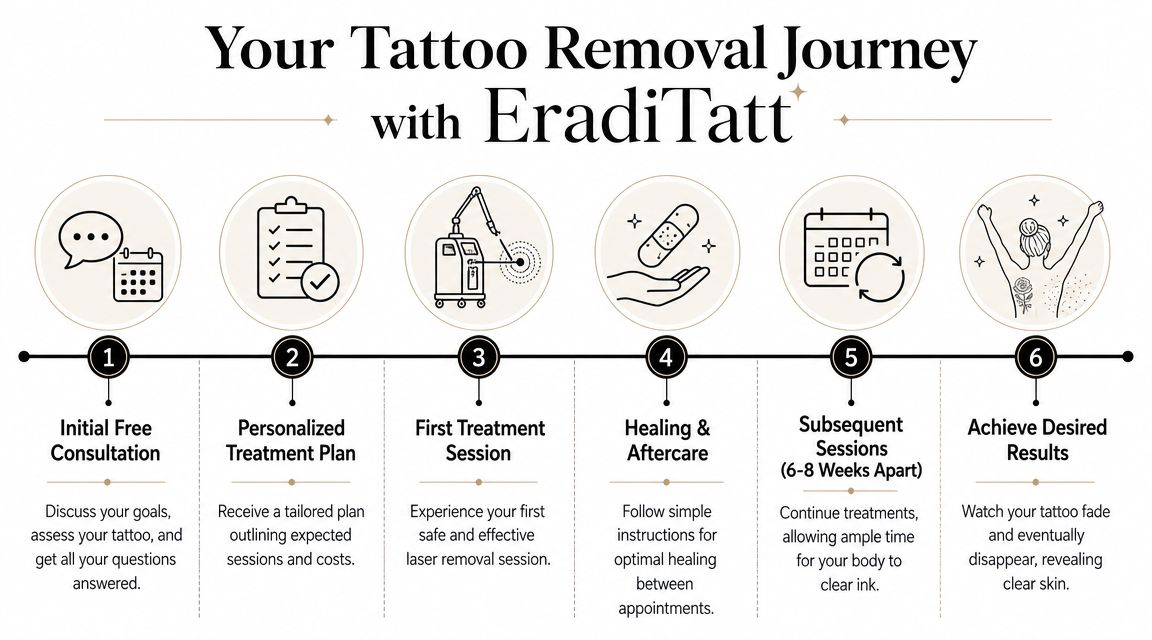
What the timeline looks like in real life
A client comes in with a deadline. A wedding in six months. A military requirement. A cover-up appointment already booked with their artist. That is usually the moment the serious conversation starts, because tattoo removal works on skin-healing time, not wishful thinking.
The first appointment is the planning visit. We look at the tattoo, talk through your end goal, and decide whether the right target is full removal or enough fading for a cleaner cover-up. Those are two different projects with different timelines, and I would rather set that expectation up front than promise a finish date no one can control.
After the first treatment, the process settles into a rhythm. Treat. Heal. Reassess. Repeat. The waiting period between sessions matters because your body needs time to clear the ink fragments the laser has already broken apart.
Some tattoos fade faster than clients expect. Others take longer, even when everything is done correctly. That is normal.
The biggest mistake people make is planning around the first session instead of the full course of treatment. If you have a date in mind, start early and leave margin for your skin to recover well. The main factors that affect tattoo removal progress often matter more than motivation or schedule.
What happens between appointments
Most of the visible progress happens after you leave the clinic.
Right after treatment, the area may look frosted, pink, or slightly swollen. Then the skin calms down, and the fading develops gradually over the following weeks. That slower phase can test people's patience, but it is part of safe treatment. More frequent sessions do not automatically mean faster clearance, and pushing the skin too hard can work against the result you want.
A realistic journey often looks like this:
- Consultation and assessment: Your tattoo, skin, goals, and deadline are reviewed together.
- First treatment session: Laser energy targets the ink selected for that visit.
- Healing window: The skin recovers while your body clears disrupted pigment.
- Progress check: Settings and timing are adjusted based on how the tattoo responds.
- Additional sessions: Treatment continues until you reach full removal or enough fading for your next step.
That next step can change. Some clients start out wanting complete clearance and later decide they have enough fading for a cover-up. Others begin with a cover-up plan, then keep going because the tattoo is responding well. A good treatment plan leaves room for that decision without rushing it.
If you need the tattoo lighter by a specific date, count backward from that event and build in extra time. Removal usually rewards patience, steady spacing, and healthy skin more than aggressive scheduling.
Factors That Influence Your Results and Pricing
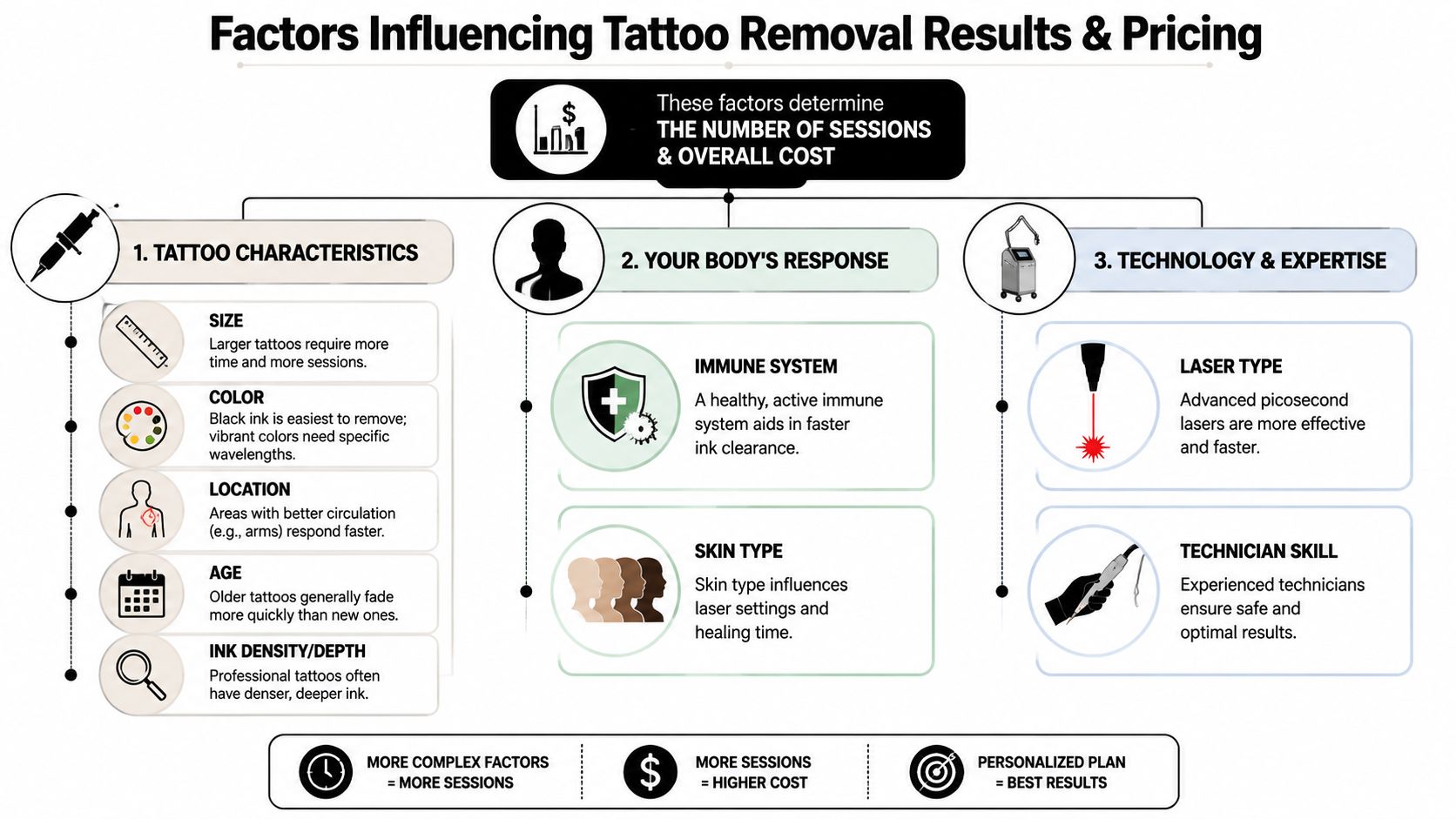
People usually ask two questions together. How many sessions will I need, and what will it cost? The honest answer is that both depend on the same set of variables. Pricing follows complexity. Session count follows how the tattoo responds.
A prospective study of 116 patients treated between January 2020 and June 2024 found an average of 6 sessions, with a range of 2 to 20 sessions, and the variables that significantly influenced session count included ink density, tattoo location, age of the tattoo, and the artist's technique, according to the published prospective study on laser tattoo removal session counts.
The tattoo factors that matter most
Some tattoos clear more efficiently because they present fewer challenges from the start. Others ask for more time.
Here's what tends to shape the plan:
- Size of the tattoo: Larger tattoos take more treatment time and more overall planning.
- Color mix: Dark inks often behave differently than bright inks, and multicolor tattoos can require more nuanced settings.
- Density of the ink: Heavy saturation usually takes longer to lighten than a more faded tattoo.
- Placement on the body: Some areas tend to clear more slowly than others.
- Age of the tattoo: Older tattoos often look different under treatment than very fresh, densely packed work.
- How the tattoo was applied: The artist's technique affects depth and density, which can affect response.
If you want a more detailed breakdown, this article on factors that affect tattoo removal progress gives a practical overview.
Why pricing has to be personalized
A flat quote without seeing the tattoo usually isn't useful. It can be too low to be realistic or too broad to help you plan. Responsible pricing starts with assessment because the treatment plan has to match the actual work involved.
A small comparison makes that easier to see:
| Tattoo example | What often makes it simpler or harder |
|---|---|
| Small faded black script | Often more straightforward because the ink is limited and the color profile is simpler |
| Bright multicolor tattoo | May need more wavelength planning and more patience |
| Dense professional piece | Can take longer because the pigment is packed more heavily |
| Tattoo on a slower-clearing area | May need a longer runway to reach the desired endpoint |
The goal isn't to make pricing mysterious. It's to keep it honest. If someone gives you a one-number answer before assessing the tattoo, that answer may not reflect the condition of your skin, your ink, or your goal.
Good estimates come from looking closely at the tattoo, not from pretending every tattoo behaves the same way.
Complete Removal vs Cover-Up Fading
A common St. Pete consultation starts like this: someone has a wedding, a new job, or an appointment with a tattoo artist on the calendar, and they want to know the fastest way to change what they see in the mirror. The right answer depends on the endpoint. Complete removal and cover-up fading use the same technology, but they are planned for two different outcomes.
When full removal makes sense
Complete removal is the better fit when you want the tattoo gone as completely as your skin and ink history allow. That usually means more sessions, longer spacing between visits, and a willingness to keep going after the tattoo looks much lighter but is still visible up close.
I tell clients to choose this path only if clear skin is the primary goal. If you already know you want new artwork in the same spot, full clearance can mean extra time, extra cost, and more treatment than you need.
Older black ink often responds well. Dense professional work, mixed colors, and layered tattoos can still be removed, but they usually require more patience. That trade-off matters.
When fading is the smarter choice
Cover-up fading is a planning decision, not a halfway effort. The goal is to reduce the tattoo enough that your artist has room to design over it with better balance, cleaner color choices, and less need to pack in heavy dark ink.
This option often makes sense when:
- A cover-up is already part of the plan: Your tattoo artist needs lighter pigment, not perfectly blank skin.
- You are working with a deadline: A partial fade may reach a useful endpoint sooner than full removal.
- Skin quality needs to be protected for future tattooing: Treating only to the level needed can be the better call.
A good fade plan is specific. It should account for your artist's style, the colors they want to use, and how much of the original piece still shows through. If you are considering that route, this cover-up fade plan for tattoo redesign timing gives a practical framework.
Clients often assume more treatment is always better. In cover-up work, that is not necessarily true. The smarter plan is the one that gets the tattoo to the right level of fade, then stops.
Clear communication between the removal clinic and the tattoo artist helps. Even businesses learning how to win more local customers do better when expectations are clear from the start, and tattoo removal is no different. Good planning prevents rushed decisions.
The question is simple. Do you want clear skin, or do you want a better canvas for new work? Once that answer is honest, the treatment plan gets much easier to set.
Why Choose EradiTatt for Tattoo Removal in St Pete

Technology has to match the ink
If you're comparing options for tattoo removal near me in St. Pete, the most useful question isn't who makes the biggest promise. It's who builds a plan around your tattoo's pigment, density, and goal.
That's where wavelength strategy matters. 1064 nm is used more effectively for darker inks, and 532 nm is better suited for brighter colors because the pigment has to absorb the right wavelength for treatment to work well. Treatment plans should match the ink instead of forcing every tattoo into the same template.
EradiTatt Tattoo Removal offers laser tattoo removal in St. Petersburg using the PiQo4 system and provides consultations for both complete removal and planned fading for cover-ups. That combination matters because clients don't all need the same endpoint, and a clinic should be able to evaluate both paths with the same level of care.
What clients usually value most
Individuals don't just want access to a laser. They want a process that feels organized, calm, and realistic.
That usually comes down to a few things:
- A clear consultation: You should leave knowing your goal, likely treatment direction, and why.
- Safe pacing: Good care respects healing time instead of pushing appointments too close together.
- Thoughtful settings: Ink color and density should guide treatment choices.
- A professional environment: Clean, attentive care makes a stressful decision easier.
Local visibility also matters when people are trying to choose a nearby provider. If you're curious how businesses improve that digital first impression, this resource on how to win more local customers gives practical context for why accurate local listings and clear service information matter so much when someone is making a nearby healthcare-style decision.
Frequently Asked Questions About St Pete Tattoo Removal
Does laser tattoo removal hurt
A lot of clients ask this after living with a tattoo for years and finally deciding they want a clean break before a wedding, a new job, or a cover-up appointment. The honest answer is yes, there is discomfort, but it is brief and manageable.
The feeling is often described as fast snaps against the skin with heat. Location matters. Thin-skinned areas over bone usually feel sharper than fleshier areas, and larger saturated pieces can wear you down more than a small linework tattoo. In the clinic, the goal is not to pretend it feels like nothing. The goal is to keep treatment efficient, use appropriate comfort measures, and make sure you know what the appointment will be like before we start.
How should I plan my schedule
Start with the timeline you need, then add margin.
Laser removal takes multiple sessions, and those sessions need healing time between them. Rushing usually leads to irritated skin, uneven progress, and disappointment. If you want a tattoo gone or lightened for a specific date, it helps to begin months ahead of that deadline, not weeks.
That matters for military enlistment, professional appearance concerns, weddings, and cover-up work. Cover-up fading often needs fewer sessions than complete removal, but it still requires planning. A realistic schedule is one of the biggest differences between a smooth process and a stressful one.
Can all tattoo colors be treated
Many colors can be treated, but they do not respond at the same speed. Black and darker inks often respond more predictably. Lighter tones, mixed pigments, and some greens, blues, or cosmetic inks can take more patience and a more careful approach.
Ink composition also matters. Two tattoos that look similar from across the room can behave very differently under laser because of depth, layering, brand of ink, and how heavily the artist packed the pigment. That is why broad promises are not very useful. The better question is how your tattoo is likely to respond, what endpoint makes sense, and whether complete removal or strategic fading fits your goal.
What does aftercare usually involve
Aftercare is simple, but it needs to be followed closely.
Keep the area clean. Reduce friction. Avoid picking, soaking, and unnecessary sun exposure while the skin settles. If blistering or frosting occurs, that can be a normal response, but it still needs proper care so the area heals cleanly.
Good aftercare supports skin recovery between sessions. It does not speed up ink clearance on its own, but it does lower the chance of setbacks that can delay your progress.
If you're ready to talk through your options, EradiTatt Tattoo Removal can help you assess whether full removal or cover-up fading makes more sense for your tattoo, your skin, and your timeline. A consultation is the best place to get a realistic plan instead of a generic promise.