
Scarring from modern laser tattoo removal is rare when it's done correctly, but the risk isn't zero. Most treatment plans take 4 to 15 sessions spaced about 6 to 8 weeks apart, and the scar outcome depends far more on the laser technology, technician judgment, and your aftercare than on the fact that you're having a tattoo removed at all.
If you're searching for does laser tattoo removal leave scars in Palm Harbor, you're probably looking at a tattoo you want gone and wondering if clear skin is a realistic outcome. That's the right question to ask.
A common concern isn't the treatment itself as much as the prospect of replacing unwanted ink with something harder to hide. In practice, scar risk usually comes down to controllable decisions: using modern equipment, choosing someone who knows how to adjust settings for your skin and tattoo, and letting the area heal without sun damage, friction, or picking. That's where good results are made or lost.
Table of Contents
- The Truth About Laser Tattoo Removal and Scarring
- How Modern Lasers Safely Remove Ink
- Understanding Your Personal Scar Risk Factors
- Why Technician Skill Is Your Best Safety Measure
- Your Guide to Proper Tattoo Removal Aftercare
- Your Palm Harbor Tattoo Removal Consultation at EradiTatt
- Frequently Asked Questions About Scarring
The Truth About Laser Tattoo Removal and Scarring
You look at the tattoo, then at your skin, and the main question is not just whether the ink can come off. It is whether your skin will still look and feel like your skin afterward.
That concern is reasonable. In clinic, I hear it from clients who are removing an old piece completely and from clients who only want enough fading for a cover-up. If you are still weighing those options, it helps to review the broader range of solutions for regrettable tattoo ink, because full removal is not the only path.
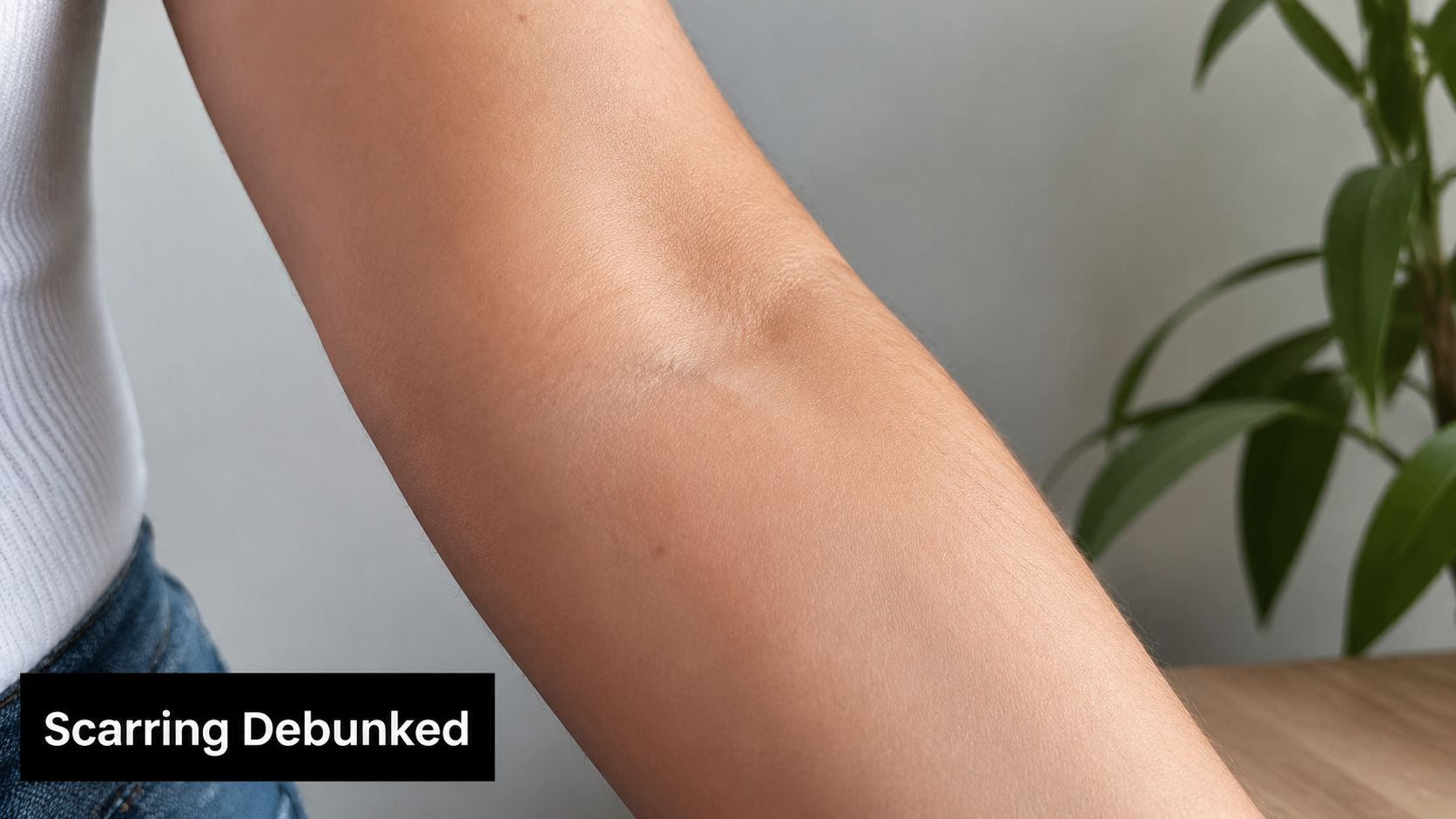
Laser tattoo removal can be done without leaving a scar, but scar risk is never a random yes-or-no outcome. It usually comes down to a few controllable factors: the condition of the skin before treatment, how appropriately the settings are chosen, and how well the area is cared for while it heals. That is the part generic articles often skip.
What people usually get wrong
The biggest misunderstanding is thinking the laser alone determines the result. It does not. The same device can be used conservatively and well, or pushed too aggressively on the wrong skin at the wrong interval.
In practical terms, scar risk usually tracks back to three things:
- Skin and tattoo history: Some clients already have scar tissue from the original tattoo, a cover-up, or a previous removal attempt.
- Technician judgment: Settings, test spots, spacing between sessions, and endpoint recognition all affect how much stress the skin takes.
- Aftercare behavior: Picking, heavy sun exposure, friction, and letting a blister break open raise the chance of pigment changes and textural injury.
Practical rule: Good outcomes come from controlled treatment and controlled healing.
Body area plays a role, but it is rarely the whole story. I am more concerned with whether the skin is already compromised, whether the treatment plan matches the client's skin type, and whether there is enough recovery time between sessions. A careful consultation does more for scar prevention than a fast sales pitch.
For a closer look at how we explain and assess this issue locally, read EradiTatt's guide to laser tattoo removal scars.
How Modern Lasers Safely Remove Ink
Older removal methods were far more likely to leave obvious skin damage because they removed tissue along with pigment. Modern laser tattoo removal works differently.
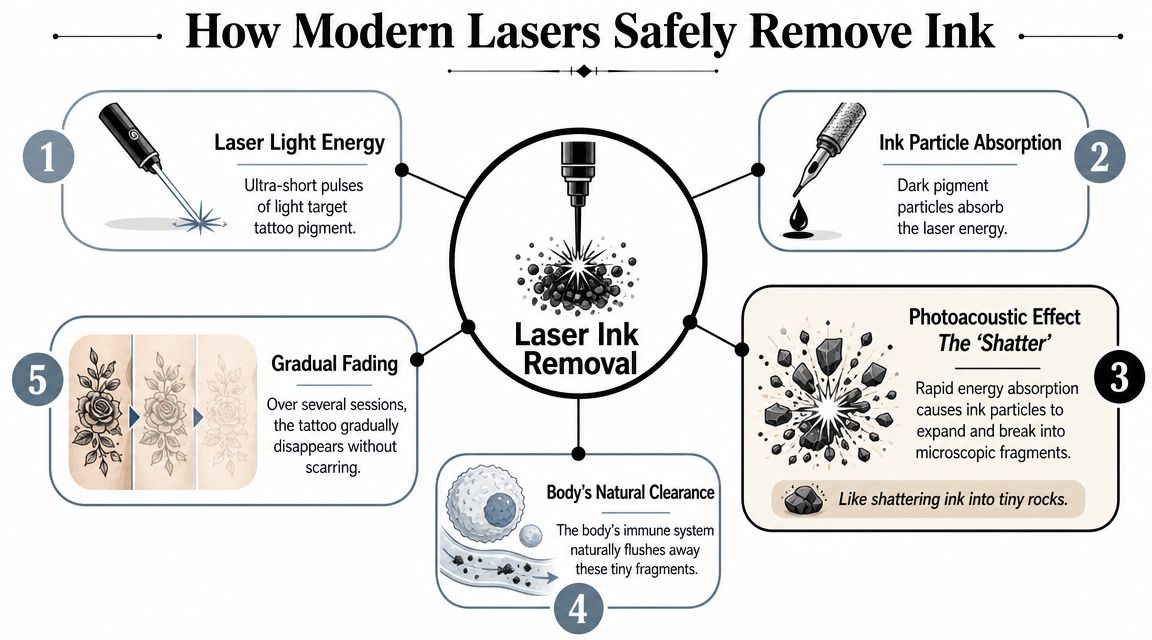
The key mechanism is the photoacoustic effect. Instead of cutting or ablating the skin, modern systems send extremely short pulses that target tattoo pigment. USF Health describes laser tattoo removal as a safer alternative to older invasive methods and notes that complications are usually temporary redness, blistering, peeling, scabbing, and swelling when aftercare is followed in its tattoo removal guidance.
The simple way to picture it
Think of tattoo ink like tiny rocks buried in the skin.
A modern laser doesn't scrape those rocks out. It hits them with light energy so quickly that the pigment absorbs that energy and breaks into much smaller fragments. Your body then clears those fragments gradually over time. That's why removal takes multiple sessions and why pushing too hard in one appointment is a mistake.
Why this matters for scars
When the laser is used properly, the goal is selective targeting. The ink is the target. The surrounding skin is not.
That's the main reason modern systems leave scars rarely when compared with older methods. The treatment is designed around precision. It's also why faster isn't always safer. A technician who chases aggressive fading in one visit can create unnecessary trauma.
A good treatment plan keeps these priorities in order:
- Target pigment first: The settings should match the ink and skin.
- Protect surrounding tissue: The skin should not be overheated or overtreated.
- Allow recovery time: Fading happens between visits, not just during them.
Clear skin after removal usually comes from measured sessions, not maximum intensity.
If you want a technology-specific overview, this PiQo4 laser tattoo removal guide explains how modern picosecond platforms are used for unwanted ink.
Understanding Your Personal Scar Risk Factors
Two people can remove similar tattoos and have different healing patterns. That's normal. Scar risk isn't uniform, and it depends heavily on skin type, tattoo depth, prior sun exposure, and aftercare, as explained in this discussion of tattoo removal scarring prevention.
That's why a real assessment shouldn't stop at “yes, we can treat it.” It should ask how your skin behaves, whether the tattoo already has raised areas, how much sun the area gets, and whether you're likely to protect it properly between sessions.
Skin type changes the treatment plan
Fitzpatrick skin type matters because pigment response matters.
Darker skin tones can be treated, but the settings and pacing have to account for the skin's own pigment response. If someone has recent sun exposure, the risk profile changes too. Tanned or irritated skin is not the same as rested skin.
A cautious technician also looks for a history of post-inflammatory darkening or lightening. That doesn't automatically rule treatment out, but it does change how conservative the plan should be.
Your tattoo itself affects risk
Not every tattoo sits in the skin the same way.
Some tattoos were applied lightly and evenly. Others are dense, layered, or contain areas where the original artist overworked the skin. If part of the tattoo already feels raised, thick, or shiny, there may be pre-existing scar tissue in the tattoo itself. The laser can target the ink in that area, but the tissue may not heal or look exactly like untouched skin.
Here's a practical way to think about the main variables.
| Factor | Impact on Scar Risk | How It's Managed |
|---|---|---|
| Skin type | Some skin types are more prone to pigment changes after inflammation | Adjust settings, pace treatments carefully, avoid overtreatment |
| Tattoo depth | Deeper or unevenly placed ink can require a more cautious approach | Test response, modify fluence and timing based on healing |
| Prior sun exposure | Recently sun-exposed skin can react more unpredictably | Delay treatment until the skin has settled and protect from UV |
| Existing scar tissue in the tattoo | Raised or textured areas may already carry structural skin change | Set realistic expectations and treat conservatively |
| Aftercare habits | Poor healing behavior increases the chance of complications | Give clear written instructions and reinforce follow-through |
What normal healing looks like
Many people panic when they see a reaction that's expected.
Temporary redness, swelling, blistering, peeling, or scabbing can happen after treatment. Those signs don't automatically mean a scar is forming. What matters is whether the area settles normally or begins to stay raised, thickened, or persistently discolored beyond the expected healing window discussed with your provider.
If a tattoo is already scarred before the first laser session, removal can clear ink from that area without removing the original scar itself.
This is one of the biggest reasons consultations should be honest. A responsible provider should tell you whether you're trying to remove ink from normal skin or from skin that already has textural change.
Why Technician Skill Is Your Best Safety Measure
A patient can have the right skin type, a reasonable treatment plan, and a modern laser, then still run into problems if the person holding the handpiece makes poor decisions in the room.
Scar prevention is not just about the device. It comes from judgment. Session spacing, energy selection, spot overlap, endpoint monitoring, and deciding when not to treat all affect how safely the skin gets through removal. The usual course involves multiple appointments spread out over time, as noted earlier, but the safe interval is not a template you apply blindly. A good technician reads the skin at each visit and adjusts.
The laser does not make the treatment plan
Two areas of the same tattoo can behave differently in one session. A dense black line may tolerate a different approach than a faded shaded section. Skin that looks calm at check-in may still be recovering under the surface, especially if the patient had a strong inflammatory response last time or spent too much time in the Florida sun.
Those calls happen in real time. The technician chooses the settings, watches the tissue response, and decides whether to continue, lighten up, or stop. Poor technique can create unnecessary heat injury even with quality equipment. Skilled technique lowers that risk.
What a careful technician actually does
Experienced providers usually work with a narrower goal each visit. Clear ink safely. Protect the skin first.
Look for these habits:
- They reassess before every session: Texture, residual redness, tanning, irritation, and healing quality all change what is safe that day.
- They match settings to the tattoo in front of them: Linework, shading, layered cover-ups, and mixed colors do not respond the same way.
- They avoid chasing dramatic frosting or aggressive endpoints: A stronger immediate reaction is not the same as a better long-term result.
- They explain why slowing down may protect your skin: More energy is not automatically better if it raises the chance of blistering, pigment change, or textural injury.
- They give detailed healing instructions and reinforce them: We cover this closely in our guide on why aftercare is important after laser tattoo removal.
A rushed provider leaves patterns. The consult feels generic. The treatment settings sound one-size-fits-all. Questions about prior healing, sun exposure, or existing scar tissue get short answers.
At EradiTatt Tattoo Removal in Palm Harbor, treatment planning is based on skin type, tattoo characteristics, and whether the goal is fading or full removal. That matters for scar prevention because conservative choices are often the right choices. Patients who spend time outdoors also need realistic guidance on UV protection between sessions. If you are trying to improve that part of your routine, this overview of ultimate Japanese sunscreen is a useful starting point.
The safest technician is the one who knows when to use less energy, treat a smaller area, or delay a session so the skin can recover well.
If you are comparing clinics, ask practical questions. Who is checking your skin before each appointment? Who decides the settings? What signs would make them postpone treatment? Those answers tell you more about scar risk than the brand name on the machine.
Your Guide to Proper Tattoo Removal Aftercare
Aftercare is where patients have the most control over scar prevention. Good treatment can be undermined by bad healing habits in a single week.
Palm Harbor's climate adds a real challenge here. Sun exposure, sweat, friction from activewear, and outdoor time can all irritate a freshly treated area. That doesn't make removal unsafe. It means aftercare has to be taken seriously.
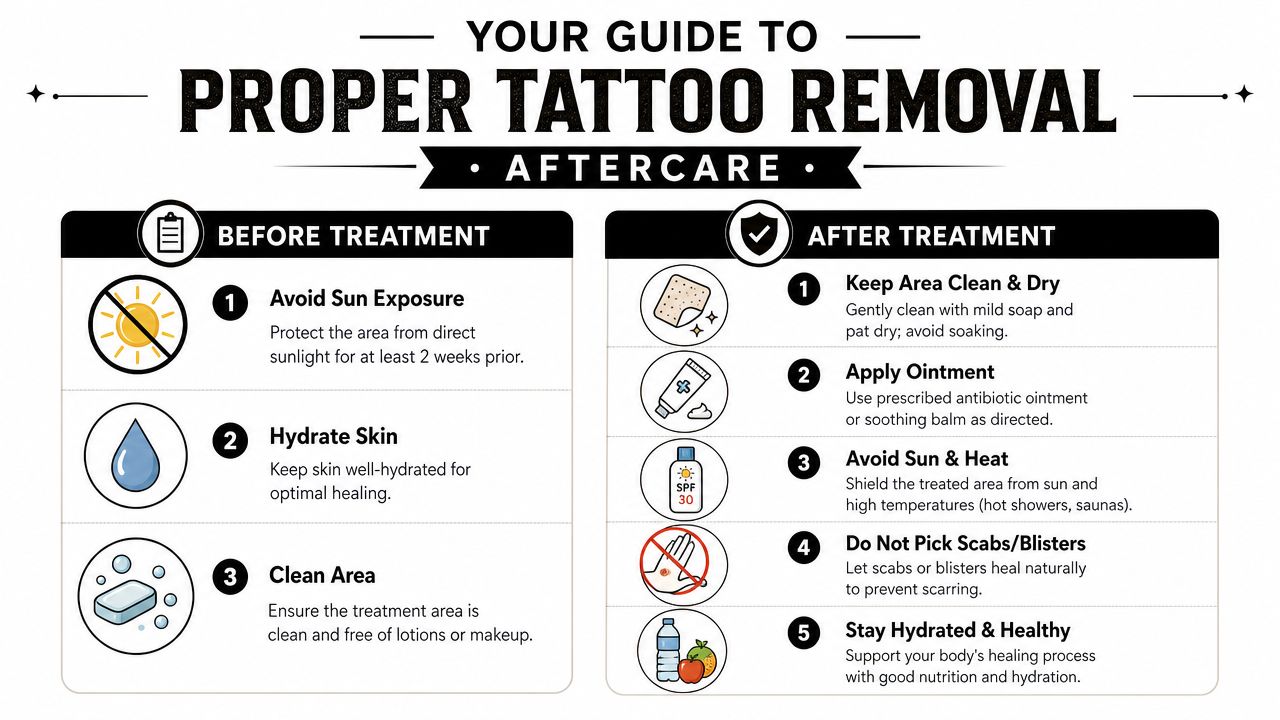
What to do before treatment
Pre-care affects how calmly the skin responds.
Use this checklist before your appointment:
- Avoid sun exposure: Sun-stressed skin is more reactive and harder to treat safely.
- Keep the area in good condition: Dry, irritated skin is not ideal treatment skin.
- Arrive with clean skin: Skip heavy products on the area unless your clinic tells you otherwise.
If sun protection is one of your weak spots, it helps to learn what high-protection products do well. A practical overview of ultimate Japanese sunscreen can help if you're trying to be more consistent about shielding treated skin.
What to do after treatment
The skin needs protection, not interference.
These habits matter most:
- Keep it clean: Use gentle cleansing and avoid dirty, sweaty conditions when possible.
- Leave blisters and scabs alone: Picking is one of the fastest ways to create avoidable marks.
- Avoid extra heat and friction: Hot tubs, intense rubbing, and tight clothing can aggravate the area.
- Protect from UV exposure: Freshly treated skin and sun do not mix well.
- Follow the product instructions your clinic gives you: Don't improvise with harsh actives or random home remedies.
Blistering can look alarming, but it can be part of a normal response. The mistake is popping it, peeling it, or scrubbing it. Healing skin doesn't need help being “sped up.” It needs stability.
The aftercare mindset that works
Think of aftercare as protecting a controlled injury while the skin rebuilds itself. Your technician manages the treatment dose. You manage the environment the skin heals in.
That partnership is what keeps a temporary reaction from turning into a lingering mark. For a more detailed clinic guide, this aftercare article from EradiTatt covers the basics clients should follow after laser tattoo removal.
Your Palm Harbor Tattoo Removal Consultation at EradiTatt
You come in expecting one simple answer. Will this leave a scar or not?
A good consultation gives you a more useful answer than that. It shows what your actual risk looks like based on your skin, your tattoo, and the condition of the area before the first pulse is ever delivered.
Clinics in the Palm Harbor area may use advanced systems such as picosecond lasers, and that technology can help with ink clearance. It does not replace careful assessment. Complete removal still takes a series of treatments, and the safety of that process depends on choices made before, during, and after each session, as described on this Palm Harbor laser tattoo removal page.
What happens at the visit
At EradiTatt, the consultation starts with the skin, not the sales pitch.
The first job is to identify anything that could raise scar risk or change the treatment plan. That includes the tattoo itself, but also the tissue underneath it and the way your skin typically heals. A flat black tattoo on untanned skin is a different case from a layered cover-up on skin that already shows shine, firmness, or uneven texture.
A technician should examine:
- Ink density and color mix
- Whether the area has any pre-existing textural change
- How much sun the area gets in your normal routine
- Whether you want complete removal or fading for a cover-up
Treatment goals matter here. A cover-up fade usually calls for a more conservative endpoint than full removal, which can lower unnecessary stress on the skin.
What a personalized plan should cover
The answer to whether laser tattoo removal leaves scars in Palm Harbor becomes more useful when it is personalized.
A solid consultation should explain where your case looks straightforward and where extra caution makes sense. In practice, that may mean longer spacing between sessions, delaying treatment until a tan fades, adjusting settings for darker skin types, or setting expectations early if the tattoo was placed over scar tissue to begin with.
Patients should leave with a plan that covers session timing, normal healing responses, warning signs that need a follow-up call, and the aftercare routine expected between visits. That is how scar prevention works in real life. Not by promising zero risk, but by controlling the factors that can be controlled.
Before you book, ask direct questions. Has the provider treated your skin type before? Will they document pre-existing texture changes before the first session? What would make them postpone treatment that day? Those answers tell you a lot about how seriously a clinic takes safety.
Frequently Asked Questions About Scarring
How do I know if it's normal healing or a scar starting
Normal healing usually looks temporary and gradually settles. That can include redness, mild swelling, blistering, peeling, or scabbing.
A developing scar is more concerning when the skin stays raised, firm, uneven, or increasingly textured instead of calming down. Ongoing symptoms that seem to worsen rather than improve should be checked promptly by your provider. If something feels off, don't self-treat aggressively. Ask to be seen.
Can a tattoo with existing scar tissue still be treated
Yes, often it can. But expectations need to be realistic.
The laser can target pigment sitting in scarred tissue, but it doesn't erase the original scar just because the ink fades. If the tattoo is shiny, raised, or irregular from the day it was applied, those features may remain even after good ink clearance. A careful consultation should identify that before you start.
What if I think I was scarred by a previous removal attempt
Start by getting the area examined rather than assuming every texture change is permanent. Some changes improve with time, and some need a different approach than more laser on the same settings.
Bring a timeline if you can. Include when the last treatment happened, how the skin reacted, and what aftercare you followed. That gives the clinician a better chance of separating active healing from textural injury. In some cases, the right next step is more spacing and skin recovery, not immediate retreatment.
If you're worried about scar risk, the most useful move is getting a professional assessment before another session. The question isn't only whether laser tattoo removal can leave scars. It's whether your skin is being treated and managed in a way that makes scarring unlikely.
If you want a clear, low-pressure opinion on your tattoo, EradiTatt Tattoo Removal can help you assess your skin, your tattoo, and whether you're a good candidate for fading or full removal. A consultation gives you a realistic plan, honest discussion of scar risk, and aftercare guidance specific to your situation in Palm Harbor.