
Tattoo removal does hurt, but it's generally painful and tolerable, not overwhelming. The feeling is commonly compared to a rubber band snapping against the skin or a bad sunburn, and many clients say it hurts less than getting the tattoo in the first place.
If you're reading this, you're probably less worried about whether laser tattoo removal is technically uncomfortable and more worried about what it will feel like on your skin, how long that feeling lasts, and whether you'll be able to handle it during a normal week in Sarasota. That's the main question.
The good news is that modern tattoo removal isn't just about firing a laser and hoping you tough it out. Comfort should be managed before, during, and after the session. That includes numbing options, cooling, smart treatment pacing, and clear aftercare so the discomfort stays controlled and your skin heals the way it should.
Table of Contents
- Answering Your Top Question About Tattoo Removal in Sarasota
- What Tattoo Removal Pain Actually Feels Like
- Key Factors That Influence Discomfort Levels
- How We Manage Pain During Your Session in Sarasota
- Understanding Aftercare and Post-Treatment Sensations
- Your Tattoo Removal Pain Questions Answered
Answering Your Top Question About Tattoo Removal in Sarasota
Yes, tattoo removal in Sarasota hurts some. What matters more is whether that discomfort is manageable for your tattoo, your skin, and your schedule.
Patients often walk in expecting the worst because they've heard one-line descriptions online and not much else. In practice, the experience is usually more controlled than they expect. The laser sensation is brief, sessions are short, and a good clinic treats comfort management as part of the procedure, not as an afterthought.
Practical rule: Don't judge tattoo removal pain by the word “laser.” Judge it by how the session is prepared, cooled, and paced.
That's also why broad internet answers can be misleading. A tiny faded tattoo on a fleshy area is a different experience from a dense piece over a bony spot. If you've been comparing providers or reading broader guides such as laser tattoo removal in Bournemouth, you've probably noticed the same pattern. The honest answer is rarely “no pain.” It's “manageable discomfort with the right setup.”
At a practical level, comfort comes down to four things:
- Preparation matters: Numbing and skin prep can change the experience before treatment even begins.
- Technique matters: Correct settings and efficient passes reduce unnecessary irritation.
- Cooling matters: Chilled air and ice help blunt heat and calm the skin.
- Recovery matters: What you do after the session affects how sore the area feels later.
If you want another Florida-specific perspective on the same question, this guide on whether laser tattoo removal hurts in Tampa is useful because the concerns are almost identical. Sarasota clients usually want the same reassurance: can I get through treatment without it taking over my whole day? In most cases, yes.
What Tattoo Removal Pain Actually Feels Like
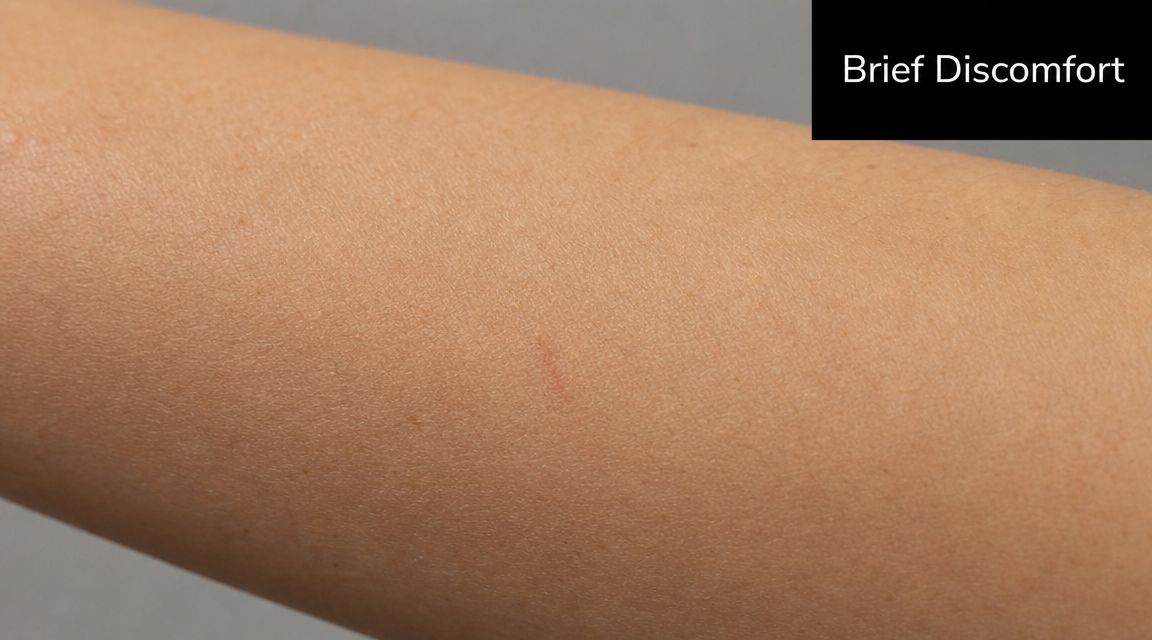
The sensation is usually described as a rubber band snap against the skin, sometimes mixed with the heat of a bad sunburn. That description matches how people commonly experience it, and it lines up with Healthline's review of tattoo removal pain, which also notes that pain varies by pain tolerance, tattoo size, and location.
Why it feels sharp and hot
Laser tattoo removal works by delivering high-energy pulses that shatter ink particles in the dermis. Your nerves don't register “ink breaking apart.” They register a fast burst of heat and impact. That's why the feeling is quick, sharp, and stingy instead of dull and achy.
For many clients, the bigger fear is the unknown. Once they know the feeling is brief and repeated in short bursts, they relax. The anticipation is often worse than the actual first pass.
The laser sensation is fast. What people usually dislike more is the buildup of heat if the area isn't cooled well.
How it compares with getting tattooed
A lot of people ask whether removal hurts more than the tattoo did. Many clients report the opposite. The reason is simple. Tattooing can drag on for much longer, while laser treatment is typically much shorter and more concentrated.
That doesn't mean removal feels pleasant. It means the discomfort is often more intense per moment but far shorter in duration. The trade-off is typically well-tolerated once the rhythm of a session is experienced.
A few details shape the actual sensation:
- Short bursts, not steady pain: The feeling comes in pulses rather than one continuous burn.
- Heat lingers briefly: The area can feel warm right after treatment.
- Sensitivity changes by spot: Some areas feel barely annoying. Others get your attention fast.
What doesn't help
What usually doesn't help is going into the session tense, sun-irritated, or expecting zero discomfort. That mindset makes every pulse feel bigger than it is. Honest expectations work better than sugarcoating.
Key Factors That Influence Discomfort Levels
No technician can accurately tell every person the same tattoo removal pain story. Location, size, density, and your own tolerance change the experience a lot. That's why the better question isn't just “does tattoo removal hurt Sarasota.” It's “how much will my tattoo removal hurt?”
Why location changes everything
Pain varies a lot by body area. Independent guidance notes that spots closer to bone or with thinner skin, such as the ribcage or ankle, tend to hurt more than fleshier areas, and that pain is influenced by tattoo location, size, ink density, and individual pain tolerance, as explained in this guide on whether tattoo removal hurts.
If you've ever had a tattoo in a sensitive area, this won't surprise you. Skin over ribs, wrists, ankles, hands, and similar spots usually gives less cushion. The laser energy feels more immediate there. Areas with more soft tissue often feel easier to manage.
Size ink density and overall treatment burden
Discomfort isn't only about one laser pulse. It's also about how much area has to be treated and how much ink is packed into the skin.
A small, faded piece can be over quickly. A larger tattoo asks you to tolerate more cumulative sensation across the full appointment. Dense ink can also mean a heavier treatment burden over time. If you want a technical comparison of laser platforms and how treatment planning affects outcomes, Cape Cod Plastic Surgery's laser guide gives helpful background on how different laser approaches are discussed in practice.
Other variables matter too:
- Individual tolerance: Some people are more reactive to quick, sharp discomfort.
- Skin condition that day: Irritated or sensitive skin usually feels less forgiving.
- Goal of treatment: Full removal often feels different from lighter fading for a cover-up because the overall process can be shorter or longer depending on the plan.
A quick self-check table
| Factor | Higher Discomfort | Lower Discomfort |
|---|---|---|
| Body location | Areas near bone or with thinner skin | Fleshier areas |
| Tattoo size | Larger area to treat | Smaller area to treat |
| Ink density | Dense, packed pigment | Lighter, more faded pigment |
| Session burden | Longer treatment area and repeated passes | Shorter treatment area |
| Pain tolerance | More sensitive to sharp heat | More comfortable with brief sting |
The point isn't to scare you. It's to give you a more useful expectation. A forearm tattoo and a rib tattoo shouldn't be described as equal.
How We Manage Pain During Your Session in Sarasota
Pain control starts before the laser fires. That's the difference between a rough appointment and a manageable one.
Before the laser starts
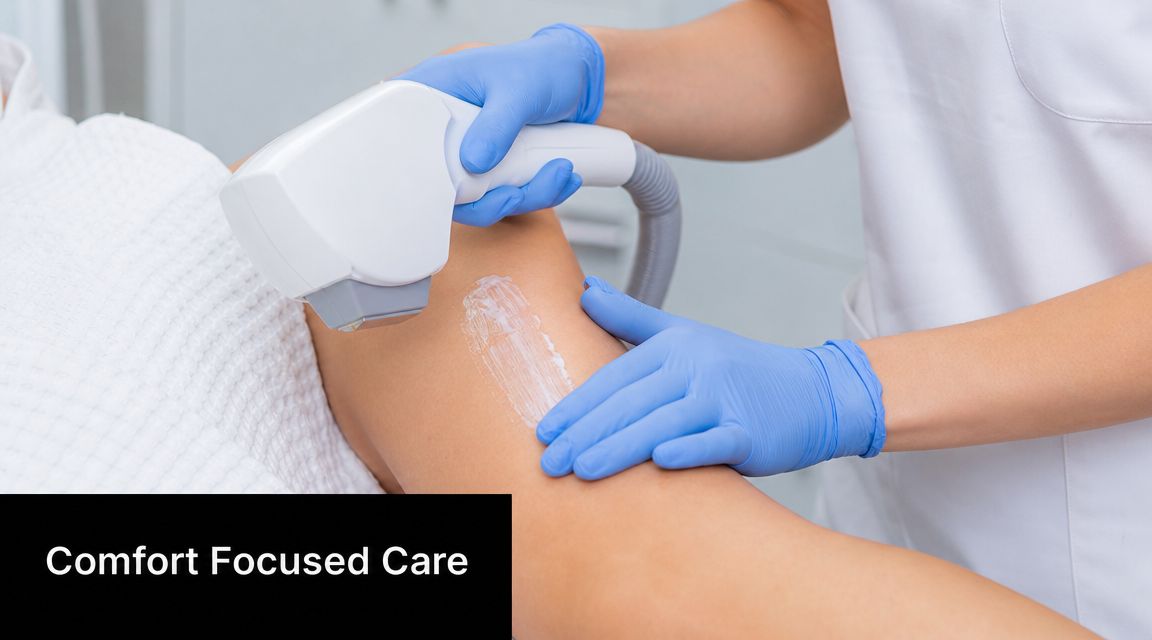
A proven way to reduce procedural discomfort is topical anesthetic, including formulations such as lidocaine-prilocaine, applied under occlusion for about 45–60 minutes before treatment. The FDA notes in its overview of tattoo removal options and results that numbing cream can reduce procedural pain when used appropriately.
That pre-treatment window matters. If numbing is rushed, the session usually feels sharper than it needs to. If it's done correctly, the edge comes off the treatment right away.
At EradiTatt Tattoo Removal, clients can review practical pain-management steps ahead of time so they know what to expect before arriving. That kind of prep reduces anxiety, which also helps.
During the actual treatment
During treatment, cooling changes the experience. Chilled air directed at the skin helps counter the heat created by the laser and gives immediate relief between pulses.
This is the point where technique matters too. Efficient passes, steady communication, and not overworking the area make a real difference. A modern clinic should be paying attention to comfort as actively as it pays attention to ink response.
If a treatment feels chaotic, rushed, or overheated, that's usually a process problem, not something you just have to accept.
Right after the session
The session doesn't end when the laser stops. Cooling the area afterward helps settle the skin and cuts down on lingering soreness.
If you want a general look at reusable cold therapy products used in spa-style treatment environments, these ice pack recommendations for spas are a reasonable reference point for the kind of post-treatment cooling clients often find helpful. The important part is simple: cool the area, protect the skin, and don't keep aggravating it once you leave.
Understanding Aftercare and Post-Treatment Sensations
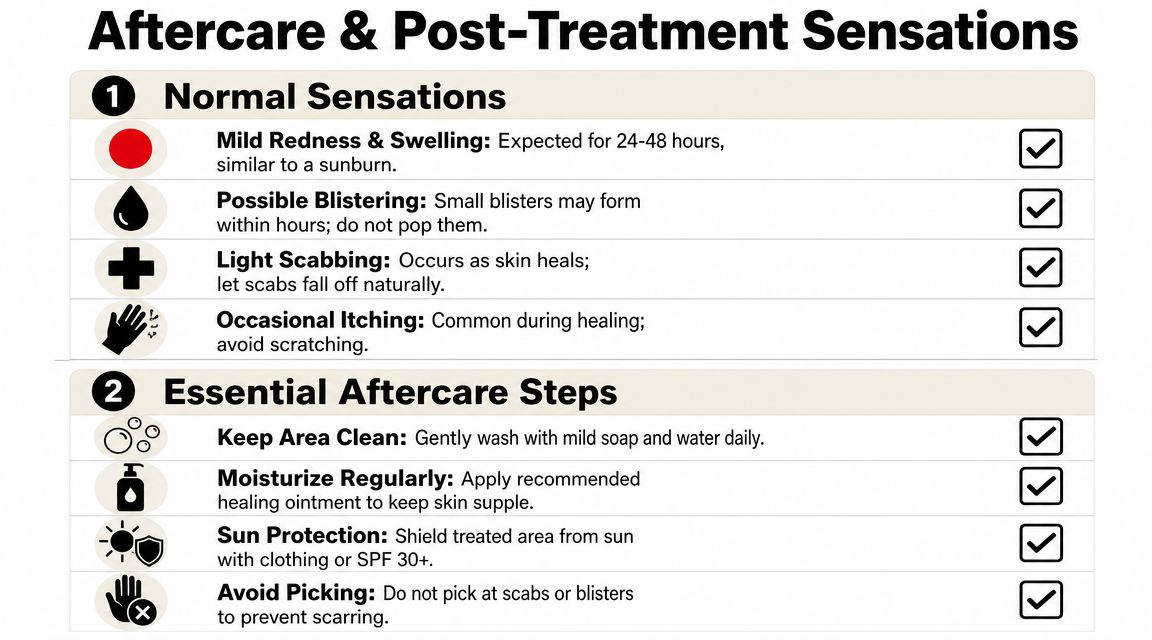
Once the appointment ends, the feeling usually shifts from quick laser sting to something more like heat, tenderness, and irritation on the surface. That recovery phase is normal. Each session can cause transient pain, redness, and soreness, and Cleveland Clinic's tattoo removal guidance notes that cooling the area with ice after treatment can reduce the cumulative pain experience.
What's normal after treatment
Most first-time clients worry that redness means something went wrong. Usually, it means the skin is reacting exactly as treated skin does. Warmth, tenderness, and a sunburn-like feeling are common early on.
You may also notice temporary surface changes while the area heals. If you want a closer look at what normal redness can look like after treatment, this article on redness after laser tattoo removal is helpful.
The post-treatment feeling is usually more annoying than alarming. Keep the area cool, clean, and protected.
What helps and what does not
Aftercare works best when it's boring and consistent.
- Keep it clean: Gently wash the treated area with mild soap and water.
- Let the skin heal undisturbed: Don't pick, scratch, or peel healing skin.
- Protect it from sun: Cover the area or use SPF 30+ once appropriate for healed skin, as shown in the infographic guidance.
- Use cooling sensibly: Ice after treatment can calm heat and soreness.
What usually makes recovery worse is friction, unnecessary touching, sun exposure, and trying too many products at once. More isn't better here. Calm skin heals better than irritated skin.
Your Tattoo Removal Pain Questions Answered
Is tattoo removal more painful than getting a tattoo
For many people, no. A lot of clients describe removal as sharper but shorter. The treatment is uncomfortable, but it's usually over fast enough that people handle it better than they expected.
Does it hurt less with each session
Sometimes yes, sometimes not. If the tattoo gets lighter, sessions may feel easier emotionally because you know what's coming and you can see progress. But sensitive areas are still sensitive, and discomfort can vary from visit to visit.
How often are sessions scheduled
Modern clinics commonly space treatments about 6–8 weeks apart to let the skin heal, and removal is progressive rather than immediate. A Sarasota clinic states that most tattoos require 5–10 sessions spaced 6–8 weeks apart, while another Florida provider notes a minimum 8-week interval between treatments, as described by Revive Tattoo Removal. That spacing helps because sessions are brief and your skin gets recovery time between them.
If I only want fading for a cover-up will it be easier
Often, yes in practical terms, because the goal may be less total clearance. Your treatment plan can focus on reducing visible ink enough for a cover-up artist to work with, rather than chasing complete removal.
What should you do next if you're nervous
Ask for an honest assessment based on your tattoo's location, size, and treatment goal. A consultation should give you a realistic pain expectation, not a canned answer.
If you want a straightforward opinion about your own tattoo, the team at EradiTatt Tattoo Removal can walk you through what the session is likely to feel like, what comfort options may fit, and whether full removal or fading makes more sense for your timeline. The best next step is a consultation built around your tattoo, not a generic pain scale.