
You’re probably here because you’ve looked at a tattoo and thought, “I’m ready to remove this, but I don’t want to trade ink for a scar.” That concern is common in St. Petersburg, especially for people removing visible tattoos before a job change, a wedding, military preparation, or a cover-up.
The short answer is this. Tattoo removal can leave scars, but good laser selection, careful treatment settings, and strict aftercare are what usually separate a smooth result from a problematic one. Old horror stories came from older methods, poor technique, aggressive treatment, and bad healing habits after the session. Modern laser removal is much more precise.
If you’re searching “does tattoo removal leave scars St Petersburg,” the useful answer isn’t a blanket yes or no. It’s understanding what raises risk, what normal healing looks like, and how to choose a provider who treats your skin with as much attention as your tattoo.
Table of Contents
- The Question on Every St. Pete Resident's Mind
- Understanding the Real Risk Factors for Scarring
- Is It a Scar or Just Part of the Healing Process
- How Modern Lasers Create Scar-Free Results
- Your Guide to Flawless Healing and Aftercare
- Finding a Trusted Tattoo Removal Specialist in St. Petersburg
- Frequently Asked Questions About Tattoo Removal and Scars
The Question on Every St. Pete Resident's Mind
In St. Pete, people don’t usually hesitate because they doubt whether tattoo removal works. They hesitate because they’re worried about what their skin will look like afterward. That’s the main issue.
Some clients are dealing with a name tattoo on the wrist. Others have larger work on the arm, ankle, shoulder, or hand that no longer fits their life. The fear is similar every time. They don’t want a visible reminder left behind after the ink fades.
The honest answer is reassuring, but it needs context. The goal of professional laser tattoo removal is clear skin, not scarred skin. When treatment is planned well and the skin is allowed to heal properly, a smooth outcome is the standard target.
Practical rule: If a provider talks only about fading ink and not about protecting skin texture, healing time, and aftercare, that’s incomplete tattoo removal counseling.
A lot of the scar fear comes from stories that mix together very different things. Some people describe normal redness, frosting, scabbing, or temporary color change as “scarring.” Others had older treatments, poor aftercare, or already had scar tissue in the tattoo before removal started. Those details matter.
A careful consultation should answer questions like these:
- What kind of laser is being used
- How will settings be adjusted for your skin type
- Whether the tattoo already has texture or scar tissue
- What healing should look like in the first days and weeks
- How sun exposure, picking, and friction can affect the result
If you want the clearest answer to “does tattoo removal leave scars St Petersburg,” think of it this way. Scarring is a risk, not the expected result. The best outcomes come from modern technology, experienced technique, and patient compliance after each session.
Understanding the Real Risk Factors for Scarring
A client may walk into our St. Petersburg clinic convinced the laser is what causes scars. In practice, scar risk usually comes from a combination of factors that start before the first pulse is delivered. The condition of the tattooed skin, the way the tattoo was originally applied, the laser choice, the treatment settings, and the healing behavior afterward all matter.
One point gets missed often. Removal can uncover texture that was already there. If a tattoo artist worked too deep, or the skin healed with raised or uneven texture years ago, fading the ink may make that change easier to see. That is not the same as the laser creating a new scar. We explain that clearly during consults because subtle texture changes are where clients feel misled if nobody addresses them upfront.
What raises the chance of visible texture change
Some risk factors are built into the tattoo itself. Others depend on how carefully the treatment is performed.
- Pre-existing scar tissue in the tattoo: Raised lines, shiny patches, or uneven texture before treatment usually point to changes already present in the skin.
- Tattoo depth and saturation: Dense, layered, or unevenly placed ink takes more planning and can require a slower schedule.
- Ink color and composition: Black ink often responds more predictably than certain bright or mixed pigments, which may need different wavelengths and more caution.
- Skin type and healing history: Skin that is prone to post-inflammatory pigment change or keloid formation needs a more conservative approach.
- Body location: Ankles, hands, fingers, and other high-friction areas usually heal less smoothly than protected areas.
- Treatment technique: Aggressive settings, poor interval spacing, and outdated devices raise the risk of thermal injury.
- Aftercare compliance: Picking, rubbing, sun exposure, and friction can turn a routine recovery into prolonged inflammation.
Older tattoo removal systems were less selective. They delivered more collateral heat into surrounding tissue, which is one reason scar stories from years ago still shape public fear today. Newer picosecond and well-managed Q-switched platforms are designed to target ink more precisely, but the device alone does not guarantee a scar-free result. Operator judgment still matters.
The American Society for Dermatologic Surgery notes that laser tattoo removal can involve temporary effects such as blistering, crusting, and pigment change, while permanent scarring is uncommon when treatment is performed appropriately and aftercare is followed, as outlined in its patient guidance on laser tattoo removal expectations and risks.
That distinction matters in clinic. Temporary surface reaction is expected. Permanent textural change is the complication everyone is trying to avoid.
A careful provider should also screen for a history of hypertrophic scars or keloids before treatment starts. The American Academy of Dermatology explains that people who form these types of scars need extra caution with any procedure that injures the skin, including laser work, in its guidance on keloids and raised scar risk. That does not automatically rule out removal, but it changes how conservative the plan should be.
At EradiTatt, this is why consultations go beyond counting sessions. We examine whether the tattoo already has texture, whether the area gets daily sun or friction, and whether your skin has a history of difficult healing. If you want a closer look at how clinics separate true scar risk from common skin reactions, our guide to tattoo removal scars and what actually causes them breaks that down in plain language.
A good treatment plan protects skin first. Ink clearance comes second to that.
Is It a Scar or Just Part of the Healing Process
A lot of anxiety after laser tattoo removal comes from seeing normal healing and assuming something has gone wrong. The first week can look dramatic even when the skin is behaving exactly as it should.
What normal healing looks like
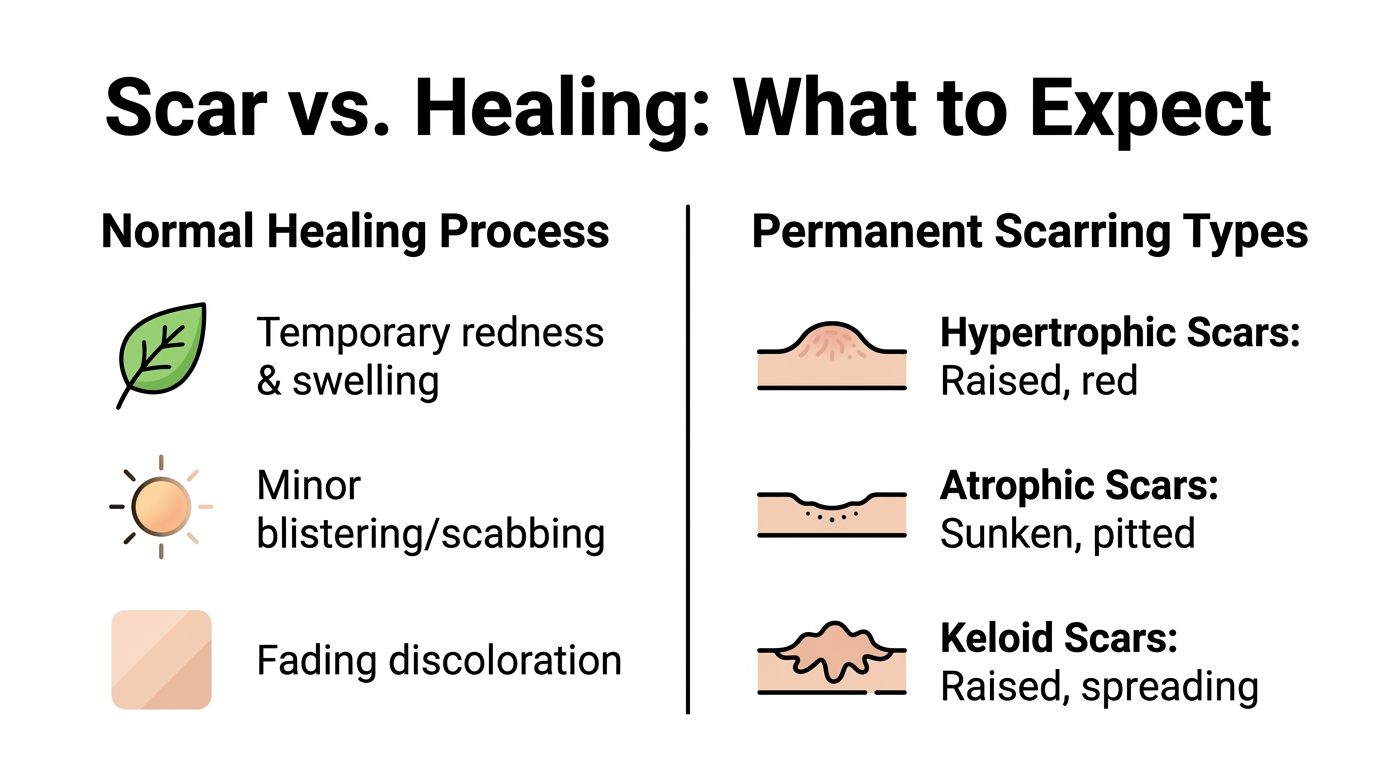
Right after treatment, the skin may look white or frosted for a short time. Then redness, warmth, mild swelling, and tenderness can follow. Some areas blister. Some develop light scabbing. None of that automatically means scarring.
This is a simple way to separate common healing from a lasting problem:
| Symptom | What It Is | Is It Permanent? |
|---|---|---|
| Redness and swelling | Short-term inflammatory response after laser energy hits ink | Usually no |
| Blistering | A common healing response as the skin reacts and begins recovery | Usually no |
| Scabbing | Part of surface repair if the area dries or blisters | Usually no, if left alone |
| Hypopigmentation or hyperpigmentation | Color change in the skin after treatment, especially in reactive skin types | Can improve over time, not the same as a scar |
| Raised, thickened area | Excess collagen or abnormal healing pattern | Can be a scar |
| Sunken or pitted area | Loss of normal skin texture | Can be a scar |
If you want a deeper look at this distinction, this guide on laser tattoo removal scars is useful because it helps separate normal recovery from true scar formation.
What true scarring looks like
True scarring is about lasting structural change in the skin, not just temporary irritation. It can appear as:
- Hypertrophic scars: raised and firm, but generally limited to the treatment area
- Atrophic scars: depressed or pitted areas
- Keloid scars: raised growth that extends beyond the original site in people prone to that response
A scar also tends to persist after the expected healing window has passed. It doesn’t just fade week by week the way common redness or post-treatment discoloration usually does.
If the skin is changing week to week, that’s usually healing. If it becomes fixed, raised, or pitted and stays that way, it needs evaluation.
Texture changes deserve an honest discussion
Visible scars aren’t the only issue clients care about. Some people notice subtle texture changes even when the skin doesn’t develop a classic raised scar. That can show up as a faint uneven surface, sometimes described as “orange peel” texture or ghosting.
A 2025 Florida cohort of 500 complete removals reported 22% resulted in subtle textural irregularities, and the source notes that this can rise for larger, more colorful tattoos needing more than eight sessions. That’s worth discussing in consultation because many clients are trying to achieve a clean look under bright natural light, not just “good enough from a distance.”
That doesn’t mean texture change is inevitable. It means an honest provider should discuss more than dramatic scar photos. Clients deserve to know about the full range of possible skin outcomes, including mild changes that may matter for weddings, professional visibility, or cover-up planning.
How Modern Lasers Create Scar-Free Results
Modern tattoo removal works differently from older, more heat-heavy approaches. The key change is precision. The laser is trying to affect ink, not cook the surrounding skin.
Why pulse speed matters
According to technical guidance on modern multi-wavelength laser systems, current platforms use both nanosecond and picosecond pulse durations to reduce scarring risk. These systems create a photoacoustic effect that shatters ink particles while limiting damage to the surrounding dermal tissue. The same source explains that picosecond pulses reduce thermal diffusion, which is the main driver of laser-induced scarring, and that selective targeting helps preserve collagen and elastin.
That’s the science behind why newer systems are safer. Faster pulses mean less lingering heat in the skin. Less heat means less collateral injury. Less collateral injury means a lower chance of the skin healing with permanent texture change.
In practical terms, modern systems let a technician adjust treatment to the tattoo rather than force the tattoo to fit one blunt method.
Why wavelength choice matters too
Different inks absorb light differently. Dark inks respond differently than brighter colors, and layered tattoos often need a more nuanced approach. Multi-wavelength platforms are built for that. They allow providers to match the light more closely to the pigment being targeted instead of over-treating the whole area.
At EradiTatt, the St. Petersburg location uses the PiQo4 platform for laser tattoo removal. That matters because a modern device gives a technician more control over pulse behavior and wavelength selection when planning for skin safety.
There’s also a useful parallel in other skin technologies. Treatments such as advanced Morpheus8 skin tightening show the same broader principle in aesthetics. Better outcomes come from controlled energy delivery, careful depth selection, and respecting skin recovery rather than chasing aggressive one-time results.
Gentle and precise beats aggressive and dramatic in skin work. Fast progress means very little if the surface texture suffers.
Your Guide to Flawless Healing and Aftercare
Good treatment settings matter. Good healing habits matter just as much. A surprising number of avoidable skin issues happen after the client leaves the office.
What to do right after your session
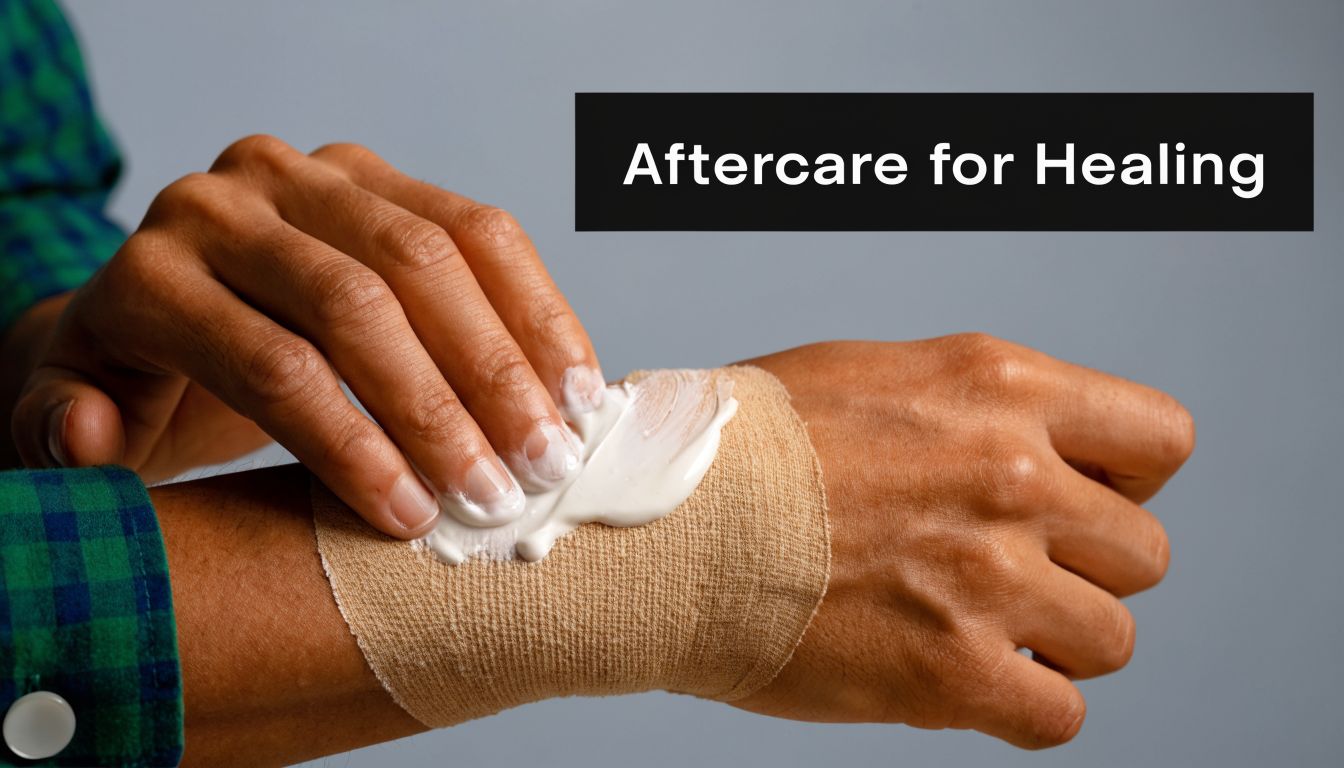
Think of aftercare as protecting a controlled wound while your body clears fragmented ink. The area needs calm conditions.
- Keep it clean. Wash gently when instructed. Don’t scrub. Don’t use harsh exfoliants or active skincare on the site.
- Use only what your provider recommends. A simple healing ointment or dressing plan is usually better than layering random products.
- Let blisters and scabs stay intact. They’re part of the repair process. Pulling them off early is one of the easiest ways to create texture change.
- Reduce friction. Tight sleeves, gym equipment rubbing the area, or constant contact from straps can irritate healing skin.
- Keep the area out of sun. UV exposure is one of the most common ways to worsen pigment changes and complicate healing.
- Give sessions enough spacing. Skin needs time to finish its repair cycle before it’s treated again.
For a more detailed breakdown, this post on why aftercare is important after laser tattoo removal explains the healing logic clearly.
What ruins healing
Clients usually get into trouble by trying to “help” the area too much. The skin rarely benefits from over-management.
Avoid these common mistakes:
- Picking at flaking skin
- Popping blisters
- Using irritating creams, acids, or retinoids on the site
- Going into heavy sun before the area settles
- Treating the site like normal skin before it is normal skin
- Ignoring signs that need follow-up, such as unusual drainage or spreading irritation
A smooth result often comes down to restraint. Leave healing tissue alone. Protect it. Let it finish.
How to think about scar support products
Not every client needs extra scar support. Many don’t. But if a provider tells you the area is fully closed and appropriate for scar care, simple silicone-based products are often the type people ask about first. If you want an example of that category, ArtNaturals' natural scar solution shows the kind of silicone patch product clients commonly look into after the skin surface has healed.
The timing matters more than the product hype. Putting anything occlusive or active on open, blistered, or unstable skin is a bad idea. The first goal is uncomplicated healing. Scar support only makes sense after that.
The best scar prevention step is still basic discipline. Keep the area clean, protected, untouched, and out of the sun.
Finding a Trusted Tattoo Removal Specialist in St. Petersburg
A St. Petersburg client usually starts with one fear: “I can live with a tattoo a little longer. I do not want to trade ink for a scar.” That concern is reasonable. The right provider should answer it with a careful skin assessment, honest risk discussion, and a treatment plan that fits your tattoo’s history instead of giving you a sales pitch.

Older tattoo removal systems had a worse reputation for texture change because they delivered heat less selectively and gave providers less control. Modern platforms are better, but the machine alone does not protect your skin. Provider judgment still matters. I look at whether the tattoo already has raised lines, whether the ink was packed heavily, whether there may be old scar tissue under the design, and whether your history suggests a higher chance of pigment shift or abnormal healing.
A consultation in St. Pete should feel specific to you. If it sounds generic, keep looking.
Questions worth asking in consultation
- What laser system are you using for my ink colors and my skin type
- Do you examine the tattoo for pre-existing texture, scar tissue, or blowout before the first session
- How do you change settings for layered, dense, or multi-color tattoos
- Would you recommend a test spot for my skin history or this tattoo
- What reactions do you consider normal after treatment, and what would make you want a call or photo update
- How do you separate temporary healing changes from true textural injury
- If I am prone to raised scars, how does that change the plan
Those questions address the core issue. Scar risk usually rises when treatment is too aggressive, the skin is not assessed closely, or the client is not guided well through healing. Good clinics talk about subtle outcomes too, including temporary frosting, swelling, blistering, pigment changes, and mild texture shifts that can look alarming before the skin settles.
If you are comparing local clinics, this overview of best tattoo removal in St. Petersburg is a useful starting point for what to evaluate during consultation.
EradiTatt Tattoo Removal serves St. Petersburg and builds treatment plans around skin tone, tattoo age, color mix, layering, and clearance goals. That matters because scar-free removal is rarely about speed. It is about using modern equipment conservatively, documenting the skin between sessions, and making sure the client follows instructions once they leave the office.
Ask to see how the clinic explains trade-offs. A trustworthy provider will tell you when a tattoo may clear slowly, when a test spot makes sense, and when complete removal may carry more risk than fading for a cover-up. That kind of honesty usually signals better care.
Frequently Asked Questions About Tattoo Removal and Scars
Can laser tattoo removal cause keloids
It can be a concern in people who are already prone to keloid formation. That’s why a history of raised scars matters in consultation. If you’ve had keloids before, say so early and clearly.
Does blistering mean I’m going to scar
No. Blistering can be part of normal healing after treatment. What matters is how you handle it. Picking, popping, rubbing, or exposing that area to irritation is what raises concern.
Is hypopigmentation the same as a scar
No. Hypopigmentation is a pigment change, not the same thing as permanent scar tissue. It can still matter cosmetically, especially on visible skin, but it isn’t mechanically the same as a raised or pitted scar.
Are some tattoos more likely to leave texture behind
Yes. Larger, colorful, dense, layered, or previously scarred tattoos can be more unpredictable. The tattoo’s history matters almost as much as the laser.
Can a tattoo look scarred when the scar was already there before removal
Yes. Some tattoos were placed over old scar tissue, and some tattooing processes create texture that becomes easier to notice as the ink fades. That’s why a good baseline skin assessment is important before the first session.
What’s the best way to lower my risk
Choose a skilled provider using modern equipment, follow aftercare exactly, avoid sun, and don’t interfere with blistering or scabbing. Most scar prevention is a combination of smart treatment and patient restraint during healing.
If you’re ready to get a clear answer about your own skin, tattoo, and scar risk, schedule a consultation with EradiTatt Tattoo Removal. A good consultation should show you what’s realistic, what can be improved, and how to remove ink while protecting the skin you’re keeping.