
You’re probably here because you look at a tattoo and don’t see a memory anymore. You see something that no longer fits your life, your work, your style, or the way you want to feel in your skin.
That question usually comes out the same way: can you fully remove a tattoo Tampa, or will there always be something left behind?
The short answer is yes. Complete tattoo removal is possible in many cases, and it’s more achievable now than it used to be. But it doesn’t happen instantly, and it doesn’t happen the same way for every tattoo. The result depends on the ink, the depth, the location on your body, your skin, and the technology used to treat it.
As a lead technician, I tell people this early because it matters. Good tattoo removal isn’t about promising miracles. It’s about building a plan that matches the tattoo in front of you and protecting your skin while the ink fades out.
So You Want to Erase Your Ink in Tampa?
Those considering tattoo removal don’t start by asking about laser wavelengths or immune clearance. They start with something simpler. They’ve got an old name on a finger, a faded design on the lower back, a sleeve they’ve outgrown, or a visible tattoo that’s become a problem for work, enlistment, or a major life event.
That’s a normal place to be.
If you’re asking whether a tattoo can be fully removed, the honest answer is that many tattoos can be removed completely, and others can be faded enough to meet a very specific goal, like a cover-up or cleaner-looking skin. What matters is setting the right expectation from the beginning.
What full removal really means
Full removal doesn’t mean one treatment and clear skin a week later. It means repeated treatments that break down pigment in stages while your body clears the fragments over time. Some tattoos respond quickly. Some are stubborn, especially if they’re densely packed, professionally applied, or placed on areas with weaker circulation.
A realistic consultation looks at a few things right away:
- Ink behavior: Black ink usually behaves differently from mixed-color work.
- Tattoo history: Older tattoos often act differently than newer, saturated pieces.
- Body location: Fingers, ankles, and other extremities tend to move slower.
- Your goal: Full erasure and cover-up fading are not the same endpoint.
The fastest way to get disappointed is to treat tattoo removal like instant correction. The best outcomes come from patience, spacing, and a plan that respects the skin.
In Tampa, personalized planning matters even more because people are active, exposed to sun year-round, and often want treatment timelines that fit jobs, events, or travel. The good news is that modern picosecond technology has changed what’s possible. The next step is understanding why.
The Science Behind Vanishing Tattoos
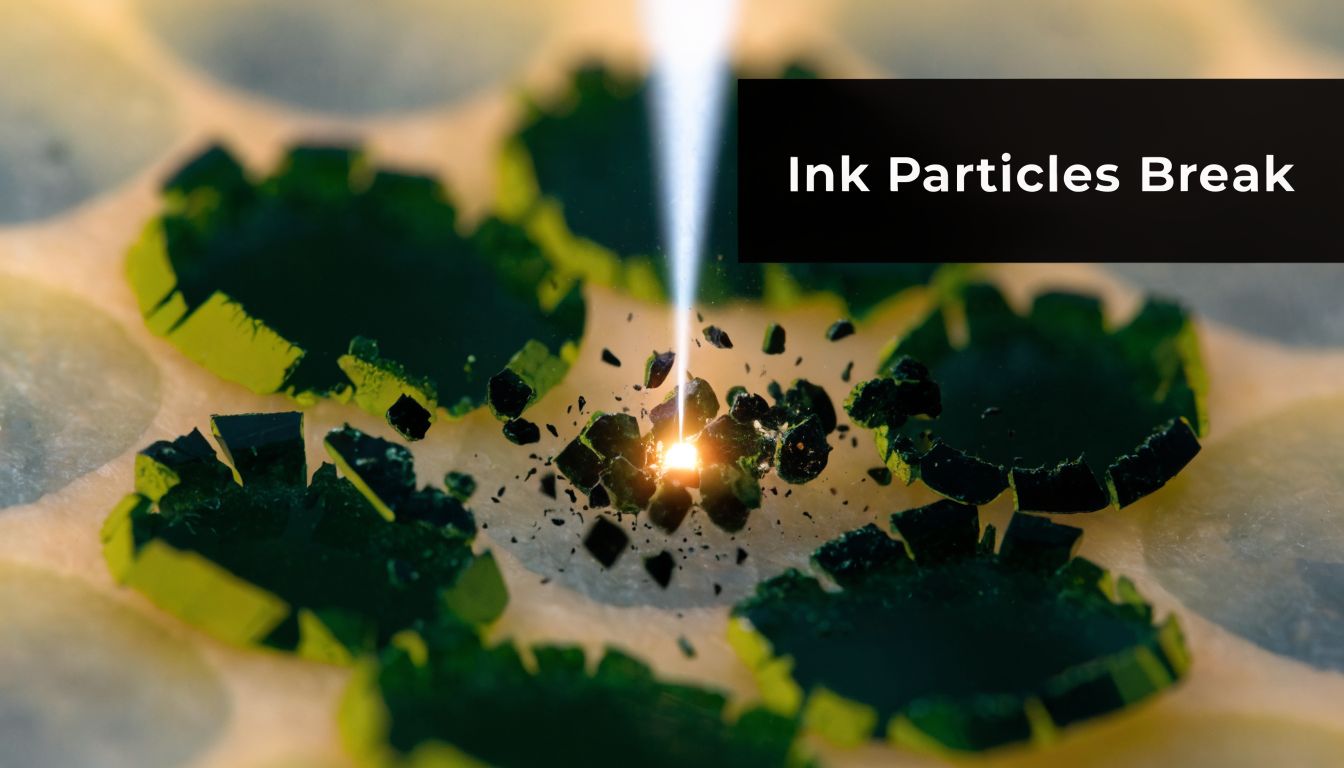
A tattoo stays visible because ink particles are too large for your body to clear on its own. Think of those particles like rocks buried in the skin. Your body can react to them, but it can’t easily carry them away.
Laser tattoo removal changes the size problem.
How the laser does the heavy work
A modern picosecond laser acts like a precision hammer. It hits ink with extremely short pulses and breaks large pigment clusters into much smaller fragments. Once those fragments are small enough, your immune system can start carrying them away through the body’s normal cleanup process.
That’s why fading happens gradually after treatment instead of all at once on the day of the session.
Picosecond lasers like PiQo4 achieve 96% good to complete clearance of tattoos with 86% patient satisfaction, and they use ultra-short pulses that shatter ink into fragments 100-1000 times smaller than older nanosecond lasers, helping the body clear pigment more efficiently and reducing the number of sessions needed by up to 37% for black ink, according to this clinical overview of PiQo4 tattoo removal technology.
Why shorter pulses matter
Older systems can still remove tattoos, but picosecond devices are better at delivering energy in a way that breaks pigment more efficiently with less unwanted heat. Less excess heat matters because tattoo removal isn’t just about chasing ink. It’s also about protecting surrounding skin.
That’s one reason clinics using systems like PiQo4 often treat a wider range of pigment types and skin tones with more control. If you want a deeper look at how the hardware differs, this explanation of new tattoo removal technology gives useful context.
Why your body finishes the job
The laser doesn’t “pull” the tattoo out. Your body clears what the laser breaks apart. That’s why healing time isn’t dead time. It’s active cleanup time.
After a session, immune cells gradually process the shattered pigment. That process is one reason tattoo removal is always spread out over multiple appointments.
Practical rule: If you want the clearest result, don’t rush the biology. The laser breaks the ink. Your body removes it.
This is also why two people with similar-looking tattoos can fade at different rates. The machine matters, but so does circulation, skin response, and how consistently the area heals between visits.
Will Your Tattoo Disappear Completely? Factors to Consider
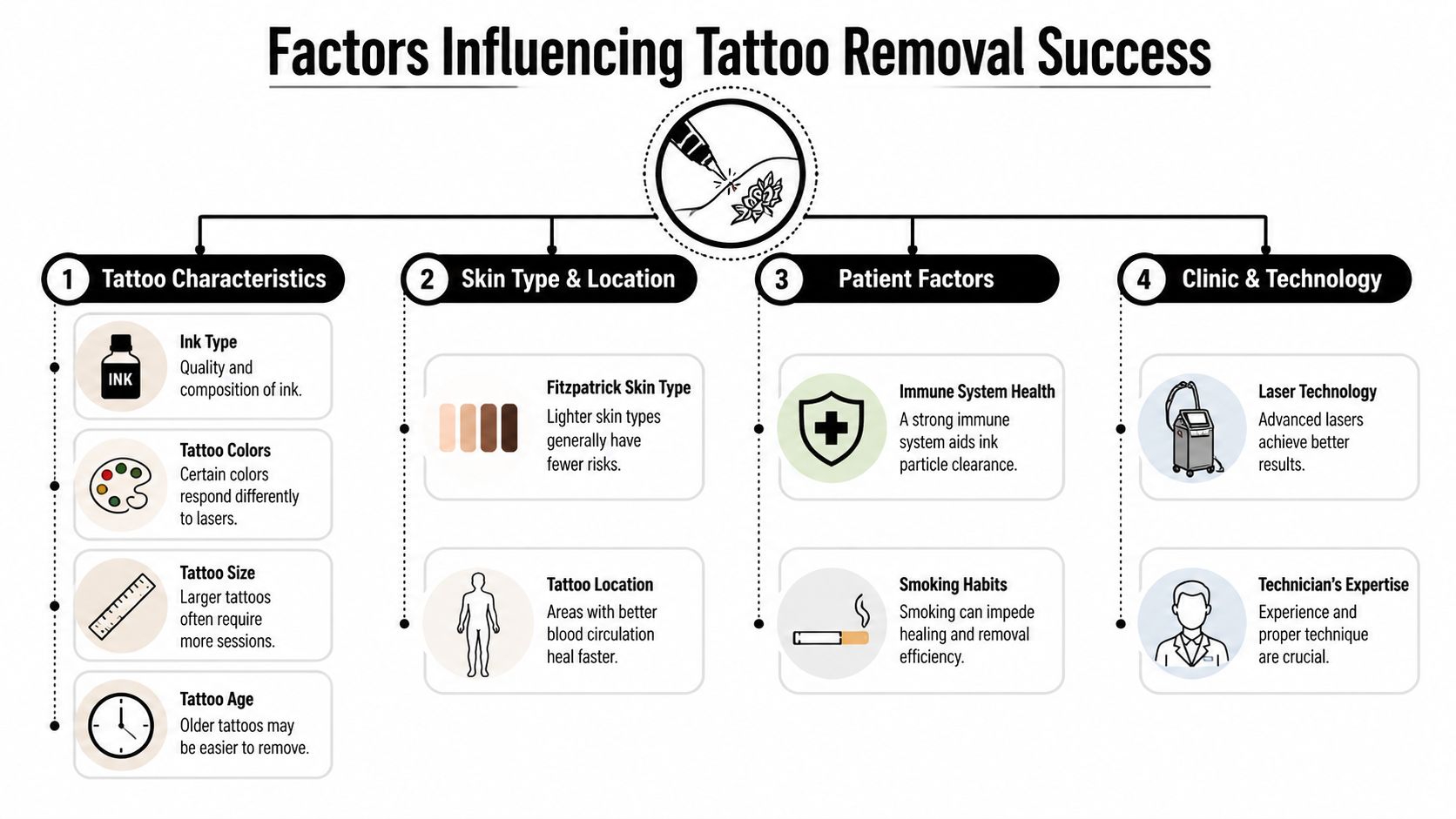
No technician should answer this question by looking only at the size of your tattoo. Complete removal depends on a group of variables that interact with each other. Some help you. Some slow the process down.
The cases we see in Tampa make that clear. Dense black ink can reach a high-success outcome over about 12 sessions, superficial amateur ink may clear in 5 sessions, and tattoos on fingers or ankles may take around 9 sessions because circulation is lower, based on before-and-after tattoo removal data from Tampa clinics.
Ink color and ink density
Black ink usually gives us the cleanest path. It absorbs laser energy well and often responds more predictably than complicated color blends. That doesn’t mean color can’t be treated. It means some shades take more planning and more patience.
Density matters just as much. Professional tattoos often sit deeper and carry more packed pigment than amateur tattoos. More dense ink usually means a longer removal path.
Tattoo age and body location
Older tattoos often have a head start because your body has already spent years slowly breaking down some pigment. A faded old piece may respond faster than a newer, more saturated tattoo, even if they look similar in size.
Location can change the pace in a big way. Areas with stronger circulation often clear more efficiently than fingers, hands, feet, or ankles.
Here’s a practical way to think about location:
| Tattoo factor | What it usually means for removal |
|---|---|
| Closer to stronger circulation | Often steadier fading |
| Extremities like fingers or ankles | Slower progress is common |
| Older faded tattoo | May respond faster |
| Fresh, saturated professional work | Usually takes longer |
Skin tone and treatment planning
Skin tone doesn’t rule out removal, but it does change how a responsible technician plans treatment. The goal is to target pigment while protecting the surrounding skin. That means proper settings, careful spacing, and realistic pacing.
Modern picosecond systems improved this process because they’re designed to break ink more efficiently while limiting unnecessary thermal injury. Even so, aggressive treatment is not the same thing as smart treatment. When clinics push too hard, skin can pay the price.
Clearer skin isn’t just about getting the ink out. It’s about getting the ink out without creating a new problem in the texture or tone of the skin.
Your health and your habits
Your body is part of the removal system, so your health matters. Healing quality, immune function, and aftercare discipline all affect the outcome.
A few patient-side factors that matter:
- Healing consistency: If you protect the treated area and let it recover fully, your skin usually handles the process better.
- Sun exposure: Freshly treated skin and heavy sun don’t mix well. Tampa patients have to take this seriously.
- Smoking and circulation: Habits that reduce circulation can make fading less efficient.
- Picking or friction: Disturbing the area can slow healing and increase the risk of unwanted skin changes.
The consultation is where prediction gets real
People often want a firm answer before anyone sees the tattoo in person. That’s understandable, but it’s not how accurate planning works. The technician needs to assess the tattoo’s color profile, saturation, depth, location, and your end goal.
Some clients are excellent candidates for complete removal. Others are better suited for strategic fading. The point of the consultation isn’t to sell a perfect story. It’s to give you the most honest map to the finish line.
How Many Sessions Will Tattoo Removal Take?
This is the question almost everyone asks next, and it’s the right one. Removal works in layers. A session breaks apart a portion of pigment, then your body spends the following weeks clearing what it can before the next treatment.
That spacing is not a delay. It’s part of the treatment.
Typical Tampa session ranges
In Tampa, laser tattoo removal typically requires 5-12 sessions for complete removal. Small, simple tattoos may need 5-8 sessions, while large or multi-colored professional tattoos can take 8-12 or more sessions. Advanced PiQo4 lasers can reduce the required session count by 20-50% compared with older technology, according to EradiTatt’s Tampa session guide.
Those ranges are useful, but they only make sense when you pair them with healing intervals. You’re not just scheduling laser appointments. You’re scheduling treatment plus recovery plus immune clearance.
Why multiple sessions are necessary
Each pass can only safely target part of the total ink burden. If you try to force too much too fast, you increase stress on the skin without giving the body time to clear the disrupted pigment.
That’s why treatment is progressive:
- Laser energy disrupts some of the pigment
- The skin calms and repairs
- The body clears fragmented ink
- The next session targets what remains
If someone promises complete removal in just a couple of visits, they’re not respecting how tattoo pigment behaves in skin.
What different tattoos tend to look like
Here’s how I frame timelines for patients in plain language:
- A small amateur tattoo: Often sits on the shorter end of the range if the ink is superficial and simple.
- A medium professional tattoo: Usually lands in the middle, especially if it has dense black linework or shading.
- A large multi-color piece: Often requires the longest commitment because the tattoo has more total pigment and more complexity.
- Finger or ankle tattoos: Can surprise people by taking longer than expected because location slows clearance.
A good plan is built around consistency, not speed. If you skip aftercare, tan the area, or treat too aggressively, the process usually gets harder, not shorter.
For Tampa patients asking “can you fully remove a tattoo Tampa,” the most accurate answer is this: yes, often you can, but the time it takes depends on whether the tattoo gives us an easy path or a stubborn one.
Protecting Your Skin During the Removal Process
The removal result doesn’t depend only on the laser. It also depends on how you treat your skin after each appointment. Your aftercare can either help the process or make it harder.
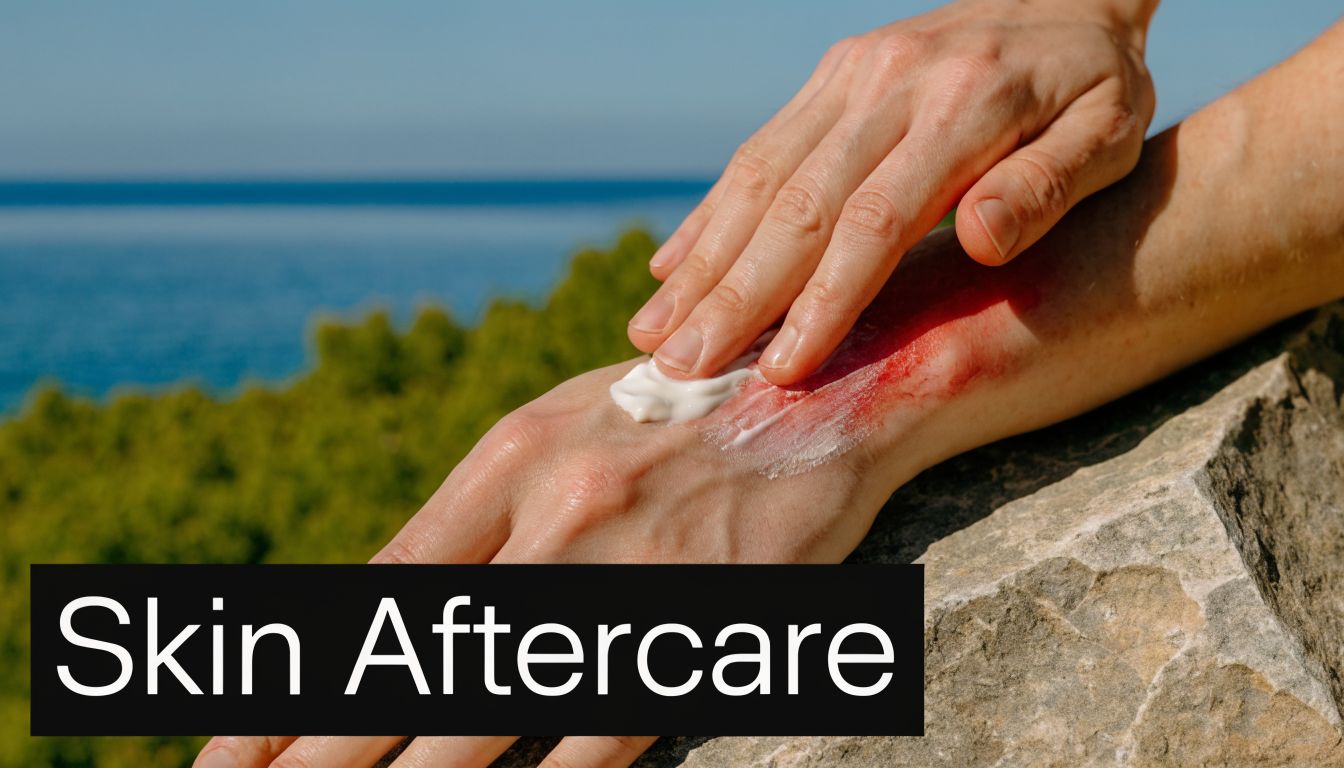
Right after treatment, some reactions are normal. Redness, swelling, sensitivity, whitening of the area, and occasional blistering can all happen as the skin responds to the laser energy. Those effects usually mean the treatment created the response we expected.
What to expect in the first phase of healing
Most treated areas feel similar to a mild burn at first. The skin may look raised or irritated, and the area can feel warm for a short time. If blistering happens, it needs gentle handling, not panic.
What matters most is avoiding friction, contamination, and sun exposure while the skin barrier resets.
A simple aftercare checklist
Use this checklist after each visit:
- Keep it clean: Wash gently as directed with mild soap and water. Don’t scrub.
- Use the recommended ointment: Apply only what your technician tells you to use, and only as directed.
- Protect the area from sun: Keep treated skin out of direct sun and don’t tan between sessions.
- Leave blisters and scabs alone: Picking can increase the chance of irritation and unwanted skin changes.
- Avoid unnecessary rubbing: Tight clothing, gym friction, and scratching can slow recovery.
- Follow the spacing plan: Don’t push for earlier sessions just because the tattoo looks ready.
What doesn’t work
Patients sometimes try to speed up removal by layering home remedies, harsh exfoliants, or random skin products over the area. That usually backfires. Irritated skin is harder to treat safely.
A few common mistakes to avoid:
- Trying to peel flaking skin
- Applying strong acids or active products
- Getting heavy sun on fresh treatment sites
- Assuming more irritation means better fading
Healing skin is not a project to manage aggressively. Clean care, patience, and sun avoidance usually do more for your final result than people expect.
If something feels worse instead of better, contact your clinic and get guidance early. Small issues are easier to manage when they’re addressed right away.
Start Your Tattoo Removal Journey with EradiTatt
If you’ve made it this far, you already know the answer is more nuanced than a simple yes or no. Complete tattoo removal in Tampa is often achievable, but the path depends on the tattoo itself and how carefully the process is managed.
The right plan starts with an in-person assessment. A technician needs to look at the ink, the saturation, the colors, the placement, your skin, and your actual goal. Some people want full erasure. Others want controlled fading for a cover-up. Both require a treatment strategy, not guesswork.
At EradiTatt Tattoo Removal, the Tampa clinic uses the PiQo4 laser system for removal and fading plans customized for the tattoo and the person wearing it. If you want to understand the first steps before booking, this guide on how to remove a tattoo in Tampa is a useful place to start.
For many patients, the most helpful part of a consultation is clarity. You get a realistic timeline, an honest sense of what your tattoo is likely to do, and a plan that protects your skin while working toward the cleanest outcome possible.
If you’re ready to talk through your options, call the central team at 844-551-1443 and ask about the Tampa location at 1715 N. Westshore Blvd, Suite 100, Tampa, FL.
If you want a clear, honest answer about whether your tattoo can be fully removed, schedule a consultation with EradiTatt Tattoo Removal. You’ll get a personalized assessment, a realistic treatment path, and guidance built around your tattoo, your skin, and your goal.